Why checking your brand name saves your budget
Investing in a brand without a prior audit is like building a house on someone else’s land, risking the loss of everything due to a single lawsuit. This article will help you build reliable intellectual property protection for your small business, starting with the foundation: checking your brand name.
Why a brand name is more than just creativity
Successful naming requires not only a creative approach but also deep legal analysis, as the unchecked use of a name can lead to it being instantly blocked by competitors. Below, we will analyze in detail the legal consequences of brand similarity and the reasons why even the most original ideas can be rejected during registration.
Legal consequences of similar names

Many entrepreneurs mistakenly equate registering a domain or a social media page with exclusive rights to use a name. According to the Law of Ukraine “On the Protection of Rights to Marks for Goods and Services,” legal monopoly arises only after the information is entered into the State Register of Certificates of Ukraine for Marks for Goods and Services. Using a designation that is identical or confusingly similar to an already registered trademark (TM) for related goods creates a risk of legal conflict.
Professional analysis helps avoid “blind spots” in your branding strategy. In practice, similarity is evaluated based on three criteria:
| Criterion | Why it matters |
|---|---|
| Phonetic | The sound of the names should not evoke associations with a competitor. |
| Graphic | Matching font solutions or logo elements lead to brand confusion. |
| Semantic | Names with similar meanings can be rejected during registration. |
Identifying such matches at the launch stage allows you to save a budget that would otherwise be spent on forced rebranding (replacing signage, domains, packaging) or compensating the TM owner for damages. If you plan to use a unique visual identity, registering a copyright can be an effective tool for additional protection of your graphics, although it does not replace the TM registration procedure for protecting the name.
Disclaimer: This material is for informational purposes only. To check the rights to a specific name, please consult the official IP office register or specialized experts.
Why your creative idea might be rejected
Imagine you have come up with a brilliant name for your coffee shop, developed a logo, and even ordered an expensive sign, only to suddenly receive a claim from a trademark owner with a similar name. In legal terms, this is called “confusing similarity,” and it is this exact legal term that becomes the main obstacle to registering most creative ideas.
The criteria by which IP Office (Ukrnoivi) experts evaluate your brand are much broader than a simple comparison of letters. Even if names are spelled differently, they can be deemed identical due to their shared meaning or similar pronunciation rhythm. This is a critical risk, as the legal security of your business begins not with filing an application, but with a sober analysis of whether you are “encroaching” on the territory of an existing player.
Expert tip: When evaluating a name at the start, never rely solely on your intuition. What seems “completely different” to you may be legally recognized as a copy. The main test is this: could an average consumer mistake your goods for a competitor’s goods if they saw the name in passing? If the answer is “possibly,” it is a signal to change your strategy.
Similarity often arises where it is least expected. For example, using synonyms or translations of names into foreign languages can also be grounds for refusal. If you are planning to scale, remember that the legal purity of a name is not just a formality, but your insurance policy against forced rebranding in the future. Understanding these nuances allows you to build a solid survival strategy in a market where your brand will be truly unique—not just in meaning, but under the law.
To avoid such traps, it is necessary to move from creative brainstorming to specific technical actions.
Related material on the topic: Intellectual Property Protection for Small Business.
Self-check methodology for brand names
Performing a self-check of a name starts with studying the official database of the IP Office (Ukrnoivi), as only this registry provides reliable information on active trademarks. The search should be conducted in stages: first by exact match, and then by phonetic and visual similarity, as these specific criteria are the most common reasons for registration rejections.
For an effective analysis, it is important to evaluate whether your name is unique as a word-based object or if it contains a creative component that should be additionally protected through copyright registration. The latter is especially relevant if the name is an original neologism or part of the brand’s artistic design. Remember that any legal conclusions regarding the “purity” of a name are preliminary, and the final decision regarding its protection is made by a state expert during the full registration procedure.
Searching public databases

Official registries are the only reliable source of information that allows you to see the real landscape of taken names in your niche. When discussing brand rights protection for small companies and startups, the first step is always to consult the IP Office (Ukrnoivi) information systems.
To conduct a preliminary analysis, you should use the following algorithm:
- Keyword search: Enter your name into the trademark database search bar, checking different spelling variations (Cyrillic and Latin).
- Status analysis: Pay attention not only to already registered marks but also to filed applications that are under review—they have priority over your future name.
- Filtering by activity type: Be sure to consider the industries in which potential competitors operate. For example, identical names for furniture manufacturing and legal services can often coexist, but within the same industry, this is prohibited. This mechanism is explained in more detail by the Nice Classification (NCL), which is the basis for the classification of goods and services.
Remember that free tools and Google searches have significant limitations: they do not show phonetic similarity and do not take into account professional examination criteria. A common mistake for beginners is believing in the “purity” of a name simply because the .com.ua domain is available. A domain is just an address on the web that grants no rights to a trademark and does not protect against potential legal claims.
Once you have collected initial data from the registries, it is important to structure the information using a checklist.
Checklist before checking a name
Searching in registries is only the first step. To minimize the risk of refusal, it is important to evaluate the name not only for identity but also for the degree of confusing similarity, in accordance with the practice of the IP Office. Your brand needs a holistic strategy where this option is based on a set of legal instruments.
| Verification stage | Why it is important |
|---|---|
| Domain and social media analysis | An occupied domain in the .ua zone indicates the existence of a trademark, as this is a direct legal requirement. An Instagram profile does not grant a legal title of ownership. |
| Niche monitoring | Identifying similar names (even without a trademark) reduces the risk of lawsuits for unfair competition. |
| Additional protection | If the name is accompanied by a unique graphic element, copyright registration will create a barrier for protecting visual identity that is independent of Nice Classification classes. |
Common mistake: considering a name free because of domain name availability or the presence of a free nickname on social networks. Legal clarity is determined by the priority of the trademark application, not by the “age” of your page. If risky matches are identified, it is advisable to change branding elements even before investing in marketing. Please remember that this material is for informational purposes only, and the assessment of registration chances always depends on the specific circumstances of the case.
When to consult professionals
Professional expertise helps avoid refusals from the IP Office, transforming a creative idea into a protected legal asset. Below, we will analyze the specifics of professional searching and why it is a strategic investment in the stability of your brand.
Hidden threats of professional searching
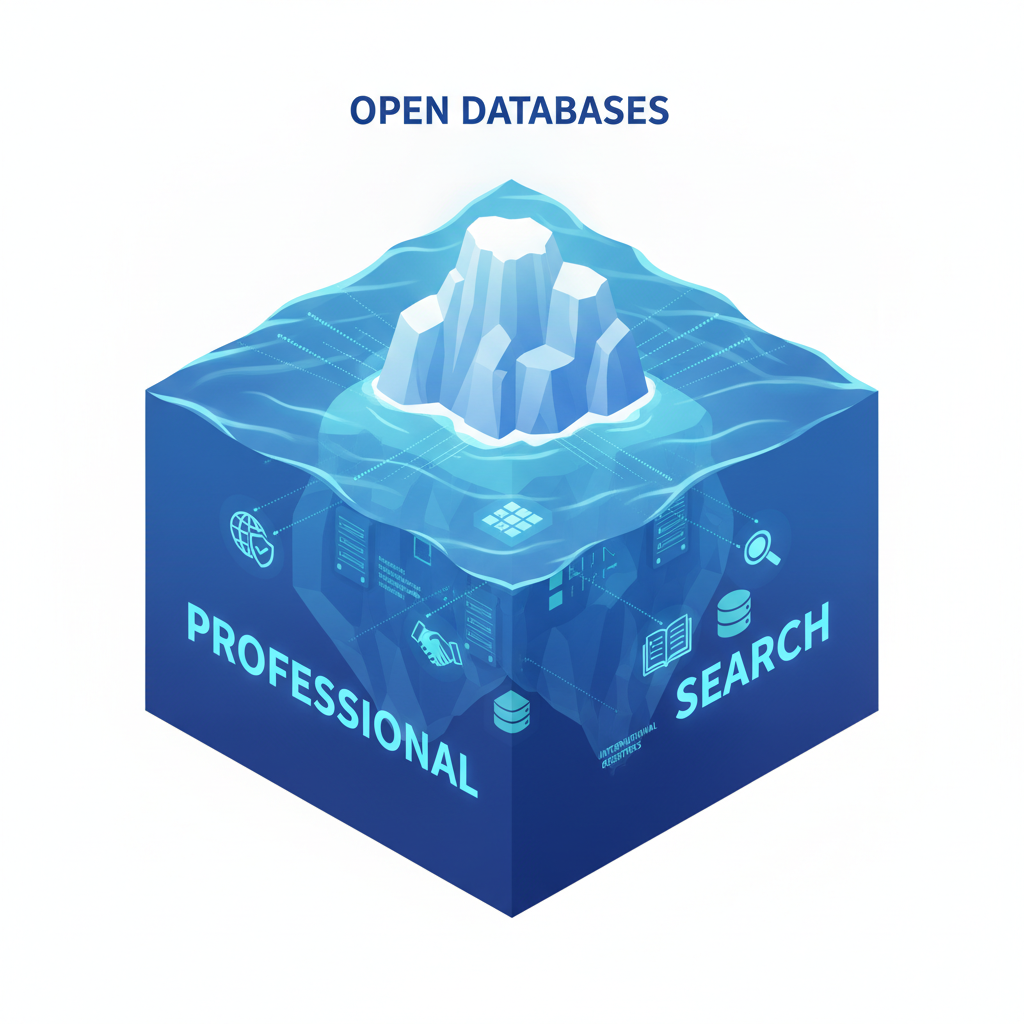
A professional search differs from a DIY search just as an amateur smartphone photo differs from a professional photoshoot with set lighting—the difference lies in the details that only an experienced eye can see. Open databases provide only the “tip of the iceberg,” ignoring layers of information that could be fatal for your brand during the examination phase.
Expert analysis always includes a check against international registries (e.g., Madrid Monitor), which may contain applications from foreign companies extending their protection to the territory of Ukraine. Furthermore, a lawyer assesses not only identity but also phonetic, semantic, and visual similarity. For example, the names “Кіт” (Cat) and “Cat” can legally be recognized as confusingly similar because they have identical meanings, which is practically impossible to track independently in databases.
In my practice, there was a case where our client, a Ukrainian clothing manufacturer, checked a name independently and found no direct matches. However, a professional search revealed an international registration for a major brand that was just preparing to enter the Ukrainian market. Changing one letter and shifting the focus of the logo in time saved the company from a lawsuit worth hundreds of thousands of hryvnias and the need for a complete rebranding after production had already launched.
Such risks make qualified analysis a mandatory step for any startup asset protection strategy, where the cost of a mistake at the start is critical. Understanding these hidden threats allows you to transition from a “hope for the best” strategy to a conscious investment in the legal integrity of your business.
An investment in legal peace of mind
A professional search is not just a formality, but a way to eliminate “blind spots” that go unnoticed during a DIY search. When a lawyer analyzes your name, they evaluate it not by whether it “sounds good,” but by the algorithms used by the IP office when making a decision. This is an investment that allows you to avoid rebranding in the middle of a business season, when every replaced sign or domain change costs more than expert advice at the start.
Entrepreneurs often believe that trademark registration is the only way forward; however, for comprehensive brand protection, one should consider combined strategies. For example, if your name has a unique graphic design or is accompanied by an original character, copyright registration becomes a powerful additional argument. Unlike a trademark, which is tied to specific goods and services, copyright protects the work of art itself, creating a multi-layered legal barrier against identity theft. Furthermore, it is important to consider the Nice Classification (NCL) as the foundation for intellectual property protection for small businesses.
Delegating the analysis to experts allows you to get more than just a “free/taken” report; you get a clear action plan:
- Determination of the actual chances of registration, taking into account phonetic and semantic similarities;
- Development of recommendations for changing the name (adding distinctive elements) if risks are identified;
- Synchronization of name protection with other assets to form a reliable strategy.
Knowing that your name is legally “clean” allows you to confidently move on to the next step — detailing its scope of application within international standards. *This material is for informational purposes only.*
If you need assistance with this task, please use our copyright registration service.
First steps toward secure branding
A thorough name search is not just a formal step, but a strategic tool that ensures reliable intellectual property protection for small businesses and safeguards your investments against legal conflicts. Since brand ownership is confirmed only by an entry in the IP Office registry (UANIPIO), and not by owning a domain or an active social media page, a professional search becomes the foundation for subsequent registration. I advise you to understand in advance how the Nice Classification determines the boundaries of your market monopoly, and for unique names with custom designs, copyright registration may also be appropriate as an additional layer of security.
My experience suggests: it is better to invest once in a high-quality legal audit of a name than to spend years fixing the consequences of reckless branding. Act systematically, and your business will be protected from day one.
Frequently Asked Questions
What are Nice Classification classes and why are they critical for trademark registration?
Nice Classification classes are the International Classification of Goods and Services for the purposes of the registration of marks. They divide all types of businesses into 45 classes (for example, class 25 is for clothing, 35 for advertising and retail, and 41 for education).
Choosing the right classes defines the scope of your protection: you receive a monopoly on the name only in the categories you selected during registration. If you registered a trademark for selling coffee, it does not prevent another business from using the same name for furniture manufacturing. A mistake in choosing classes can lead to your brand remaining unprotected in key business areas.
Can I protect a business name through copyright instead of registering a trademark?
This is a common misconception. Copyright applies to works of literature, art, or science, but a brand name by itself is rarely considered an object of copyright because it is usually too short for creative protection.
However, in certain cases, copyright registration can be useful if your name is part of a unique logo or a complex graphic design. But for the full protection of a trade name against use by competitors, the trademark registration procedure is the only effective legal tool.
Is there a difference between TM registration in Ukraine and international registration?
Yes, registration in Ukraine (via the IP Office) provides protection only within the territory of our country. If you plan to expand into foreign markets (for example, via Amazon, Etsy, or by opening offline representative offices), your Ukrainian trademark will not stop competitors abroad.
There are two paths for entering the international market:
- National registration: filing an application separately in each country where you operate.
- International registration (Madrid System): a single application that allows you to extend protection to over 120 countries worldwide.
What should I do if I am already using a name but have discovered a similar registered trademark?
This situation requires caution. First, evaluate whether you belong to the same Nice Classification class — if you operate in different niches, the conflict may be less critical. Second, check whether this trademark is actually being used: if the mark was registered more than 5 years ago but is not being used, there are legal mechanisms (through the courts) for the early cancellation of such registration.
Important: do not ignore this fact. It is better to conduct a professional audit to understand if there is a real threat of a lawsuit for intellectual property infringement.
How long does the trademark registration process take from filing to receiving the certificate?
Currently, the standard trademark registration procedure in Ukraine can take from 18 to 22 months. However, it is possible to expedite the registration (for an additional fee), which allows this period to be reduced to 7–9 months.
It is important to understand that legal protection is granted from the moment the application is filed, but the final certificate is issued only after all stages of the examination are completed and the duties are paid. Throughout this time, your brand is under a certain level of legal protection, so the procedure should be initiated as early as possible.