Intellectual Property: The Foundation of Your Business
For many entrepreneurs, intellectual property seems like something ephemeral, until competitors copy their name or content, putting the entire business at risk. In this article, we will analyze the strategy for protecting your intangible assets, turning them into real capital.
Checking the Name: Your First Step
Any strong brand starts with a name, but legal security requires verifying its uniqueness in official registers. We will examine how to prevent conflicts with the owners of already registered trademarks and protect your investments.
Why Verification Saves Your Budget
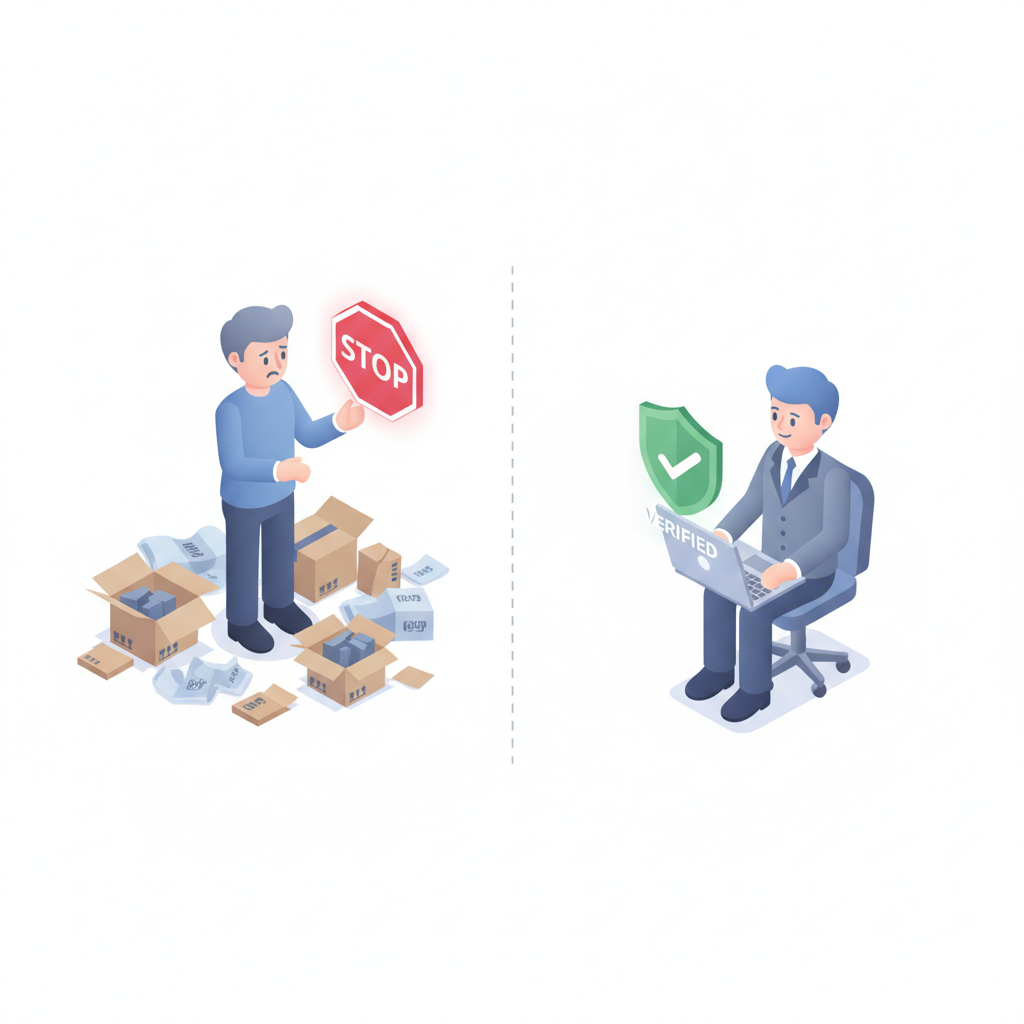
Many entrepreneurs make a strategic mistake by launching advertising and producing branded goods before checking the name for identity. If it turns out that the designation is confusingly similar to an already registered trademark (according to IPRICE criteria), the business risks receiving a demand to cease using the brand and pay damages.
Risk Comparison: Preventive Verification vs. Consequences of a Lawsuit
| Criteria | Scenario Without Verification | Scenario With Verification |
|---|---|---|
| Financial losses | High (rebranding, fines, loss of domains) | Minimal (cost of analysis) |
| Time expenditure | Prolonged litigation | Predictable project launch |
| Reputation | Risk of “on-the-fly” rebranding | Secured asset |
Our experience shows: one of our retail clients neglected preliminary analysis and spent a significant budget on signage and transportation, but after receiving a claim from another rights holder, they were forced to undergo a complete rebranding. The cost of such changes is many times higher than the price of a professional search.
Since the registration procedure does not allow for application amendments after filing, preventive actions serve as legal insurance for your marketing budget. Although some objects (such as texts or photos) receive automatic protection, formal copyright registration remains the most reliable tool for proving ownership in court or when resolving conflicts on marketplaces.
Self-Search Checklist
A self-search is the “first line of defense,” allowing you to identify obvious conflicts before making marketing investments. Although lawyers use private databases for professional audits, you can conduct a preliminary analysis via the official search portal by following this algorithm:
- Visit the official website of the IP Office database (UANIPIO).
- Select search category: choose “Trademarks” to search among registered marks and filed applications.
- Use various variations: search for the name not only by exact match, but also by partial match or similar sounding names.
- Check Nice Classification classes: ensure you are searching within the classes of goods and services in which you intend to operate.
- Analyze status: pay attention not only to active certificates but also to filed applications — they also hold priority.
If the name turns out to be available, it is important to secure your rights as quickly as possible. We will help you professionally register your trademark and also take care of protecting other brand elements, such as your logo or brand identity.
Important: Search results in public registers are for informational purposes only. The final decision regarding the registrability of a mark is made by an IP Office expert after a substantive examination.
Copyright Registration: Protecting Your Creative Assets
After protecting your name, you need to look after your unique content, software code, and design. Let’s look at the objects that require registration and the advantages that an official certificate provides to an author in a competitive market.
Objects That Require Registration

As part of a comprehensive business security strategy, it is important to understand that not every creative work can be protected as a trademark. For a company’s visual and textual capital, there is a copyright tool that covers a broader spectrum of objects.
For startups and online retail, it is critical to secure rights for the following elements:
- Website and social media content: unique product descriptions, blog articles, and advertising copy.
- Software code: source code for mobile applications, scripts, and databases.
- Design and graphics: packaging layouts, original illustrations, fonts, and professional product photography.
- Instructions and methodologies: training courses, corporate guides, and technical documentation.
“The main problem with copyright is proving the date of creation. Without official depositing or registration with the IP Office, it is easy for an infringer to claim they created similar content before you did. Registration settles this issue by fixing your authorship at a specific point in time,” — Anton Polikarpov.
Official registration is not mandatory for rights to arise; however, it is an effective preventive tool that simplifies the process of proving authorship in the event of disputes or third-party claims.
Benefits of Official Registration
Although Ukrainian legislation grants authors certain rights from the moment an object is created, in practice, the lack of an official certificate makes it significantly harder to prove ownership. State registration with the IP Office (UANIPIO) establishes a priority date, which is a key argument for legal protection against plagiarism. For businesses, this process is the foundation for capitalizing on intellectual assets.
Documenting your assets allows you not only to scale safely but also to receive legal support in the event of disputes. If you aim to secure rights to your content, copyright registration is the primary tool for anchoring your intellectual capital within the legal framework.
Related material on the topic: NCL Classes as the Foundation of Intellectual Property Protection for Small Business.
Survival Strategy: A Comprehensive Approach
Effective asset security is a combination of a legal shield and offensive tactics, where we define priorities for preserving capital and analyze the impact of intangible assets on the actual value of your company.
Protection Priorities for Small Business

In small business, resources are limited, so trying to register “everything at once” is a path to a cash flow gap. A systematic approach requires a sober assessment of assets based on their criticality to operational activities.
To structure this process, I recommend using a priority matrix. It will help you understand where to direct your legal security budget first, and which objects can wait until the scaling phase.
Such distribution ensures that legal protection becomes a well-considered investment rather than just an expense. Read more about the initial steps in our guide: Name Verification.
Related material on the topic: Name Verification.
How IP Affects Business Valuation
Having registered rights to intangible assets is often a decisive factor during audits conducted by potential investors. When you build a business, you are creating not only a sales system but also capital that has its own market value. Without legal confirmation of ownership, your ideas, brand, or software are worth exactly zero to any external buyer, as they are not protected against copying.
The materialization of intellectual achievements directly affects capitalization through asset valuation mechanisms. When rights are properly documented, they move from the “expenses” category to the “assets” category on the company’s balance sheet. This opens doors for obtaining loans against rights, scaling through franchising, or a profitable business exit. For example, a company that has explored intellectual property protection for small businesses on social media (using Instagram as an example) and has a unique packaging design with an official IP Office of Ukraine certificate is valued significantly higher than a similar manufacturer without any paperwork.
Expert tip: Even if you are not planning a sale in the near future, remember that investors are not buying your effort, but your right to a monopoly in the market. Registering assets creates a “legal wall” around your product, turning it from a simple commodity into protected intellectual property that can be scaled. This is especially important for startups, where the core value lies in algorithms or a unique visual style.
Understanding how these assets form financial attractiveness helps to correctly set priorities in management. After all, every document obtained on time is not just a piece of paper, but a tool to increase your market share. Now that we have covered the foundation and valuation strategy, it is time to move on to the final steps of implementing protection.
Time to Act: Intellectual Property Won’t Wait
In current market conditions, moving from an idea to an asset is a survival strategy. Your developments, content, and brand are the foundation of a monopoly that protects against unfair copying. According to the Law of Ukraine “On Copyright and Related Rights”, protection of objects arises from the moment of creation, but official registration provides irrefutable evidence of your status in case of legal disputes.
Practice shows that the most frequent mistake owners make is waiting for their idea to be “stolen” before taking action. However, in court, the party with the earlier certificate holds the advantage. This is not just a document, but a tool that turns intellectual achievements into real assets that are considered during Due Diligence or business valuation for investment purposes.
Priority steps for an entrepreneur:
- Asset Audit: Identify which elements (texts, design, code) have commercial value.
- Evidence Documentation: Use certificates as a basis for protection against pirated copying online.
- Strategic Planning: Register rights before entering the mass market to avoid being blocked by competitors.
Intellectual property is the only asset that guarantees your security, and timely registration today means peace of mind for your business tomorrow. Follow the link to copyright registration to get professional advice and protect your product.
If you need help with this task, use the copyright registration service.
Frequently Asked Questions
Can a business idea that has no material embodiment yet be protected?
According to intellectual property law, ideas, methods, processes, or mathematical concepts as such are not subject to legal protection. Only their specific expression (implementation) can be protected. This means you cannot patent the idea of a “dog walking app,” but you can protect:
- Software code of your app as a literary work.
- Interface design (UI/UX) as an object of copyright or an industrial design.
- Logo and brand name as a trademark.
- Business plan or marketing strategy as a trade secret (subject to proper documentation).
To safeguard yourself at the idea stage, it is important to sign Non-Disclosure Agreements (NDAs) with partners and developers, legally binding them not to use the information received for their own purposes.
What is the difference between registering a trademark and obtaining a patent for an invention?
Many entrepreneurs confuse these concepts, although they protect different aspects of a business:
- Trademark (TM) — this is your brand (name, logo, slogan). It allows customers to distinguish your goods or services from those of competitors. TM registration grants the exclusive right to use the sign within specific Nice Classification classes.
- Patent for an invention (utility model) — this is the protection of a technical solution. A patent grants a monopoly on the method of manufacturing a product, a unique device mechanism, or a new chemical composition.
If your business is based on selling goods under a specific brand, the first priority is to register a TM. If you have created a unique technological device, you need a patent.
What is international brand registration, and does a small business need it?
Trademark registration in Ukraine is valid exclusively within the territory of our country. If you plan to enter markets in the EU, USA, or other countries, your Ukrainian TM will not protect you from the use of your name abroad.
For international protection, the Madrid System is most commonly used, which allows filing a single application with the WIPO International Bureau to extend the registration to dozens of member countries. This is advantageous if you:
- Have an online store with international shipping.
- Plan to open representative offices or franchises in other jurisdictions.
- Collaborate with international marketplaces where proving brand rights is essential.
How can I prove that content (articles, photos) belongs to me if I haven’t officially registered it?
Although copyright arises the moment a work is created, in the event of a dispute, courts require compelling evidence of authorship. If official copyright registration is absent, you can use indirect evidence:
- Files with metadata (creation dates on a computer or camera).
- Publication logs on a website or social media (edit history).
- Testimony of third parties or contracts with contractors (designers/copywriters) that clearly specify the transfer of property rights to you.
However, this evidence is vulnerable. An official certificate is a state document that shifts the burden of proof to the opponent: it would then be up to them to prove in court that you are not the author.
Do I need to register a copyright for every social media post?
This is not economically viable for small businesses. However, it is worth registering core assets that form the foundation of your content:
- Brand design code: sets of icons, corporate patterns, and unique story templates.
- Website: comprehensive protection of the design and software of the web resource.
- Proprietary courses or methodologies: if you sell your own knowledge or training.
- Packaging mockups: if the design is of significant marketing importance.
You can group objects (e.g., register a collection of articles or a series of illustrations), which significantly optimizes procedural costs compared to registering each element individually.