Why is your code the main asset of a startup?
Your code is not just a set of characters for executing functions, but a capitalized asset upon which the project’s valuation depends during an Exit. In this article, I will break down how proper intellectual property management for a startup transforms development into a legally protected product ready for investment.
Why a standard NDA is not enough for code
A signed non-disclosure agreement only limits information leakage, but it does not grant rights to the development itself. We will examine critical mistakes in developer contracts and hidden threats that lead to the loss of key system modules.
Legal gaps in developer contracts

Many founders mistakenly assume that paying for a developer’s services automatically transfers property rights for the code to the company. However, copyright arises for the creator the moment an object is created; therefore, without clear provisions in an assignment agreement, the startup risks remaining only a “user” of its own product.
Another common mistake is signing an NDA exclusively. This document regulates confidentiality but does not record the transfer of rights to the development. To avoid the “founder trap,” where the code legally belongs to the developer, it is necessary to sign an IP Assignment Agreement.
| Criterion | NDA | IP Assignment Agreement |
|---|---|---|
| Purpose | Protection against disclosure of secrets | Acquisition of ownership of code |
| Result | Preservation of secrecy | Securing the asset on the balance sheet |
Practical case: our client lost the opportunity to attract investment due to the lack of acceptance certificates specifying particular commits in the repository. Without proper development “hygiene,” it is impossible to confirm the right to the result of intellectual activity during Due Diligence. The final stage of securing rights is registering the copyright with the IP office, which forms an indisputable evidentiary basis for protecting your assets.
Risks of losing rights to key modules
The lack of clear documentation of rights in contracts results in a startup becoming a hostage to its own developers. When key modules are created without proper documentary support, a legal illusion of ownership arises: the founder is convinced that the code belongs to the company because they paid for it, but the law says otherwise.
Case Study: How a freelancer halted an investment round
One of our clients, a promising fintech startup, was preparing to raise investment. During the due diligence process, the investor’s lawyers discovered that a critical calculation module was written by a freelancer with whom only an NDA had been signed. No agreement on the assignment of proprietary rights existed. Upon learning about the upcoming deal, the freelancer refused to sign documents retroactively without an additional payment of $20,000. Since the product would lose its value without this module, the founders had to either pay the “ransom” or walk away from the round. This is a classic example of how ignoring proper rights management at the start creates critical risks in the future.
According to the Law of Ukraine “On Copyright and Related Rights,” proprietary rights to an object created by order belong to the author unless otherwise established by a contract. To avoid such traps, follow these basic rules:
- Always sign an IP Assignment Agreement or clearly define the terms of rights transfer in your service agreement.
- Document the transfer of every individual module through acceptance certificates.
- Maintain a history of commits and correspondence that validates the technical requirements.
This approach ensures that your project’s capitalization grows based on real assets, not just the word of contractors. Understanding these risks logically brings us to the question of how the state mechanism for protecting your digital product actually works.
Related material: Intellectual Property Structuring for Startups.
How copyright protection for code works
State registration turns abstract lines of code into a legally recognized asset, providing the founder with a reliable tool for protection against copying and third-party claims.
We will examine which elements of the system are subject to registration and how the Berne Convention helps protect software outside of Ukraine.
What exactly is subject to registration

According to the Law of Ukraine “On Copyright and Related Rights” (specifically, Article 19), a computer program is protected as a literary work. However, for business purposes, it is important to distinguish between an idea (which is not protected) and its specific expression. An effective way to define the scope of rights is through professional copyright registration with the IP Office (UkrNOIVI), which allows you to legally secure rights to digital assets.
This protection should cover the key elements of the product:
- Source Code: The text form of the program that constitutes the foundation of its functionality.
- Algorithms and Architecture: The specific logic and sequence of operations implemented in the code.
- Databases: Structured arrays of information that are the result of creative work in selecting or arranging data.
- GUI (Interface): The graphical representation and interaction logic that form the recognizability of the software.
A typical mistake for startups is assuming that the mere fact of development automatically consolidates rights within the company. In practice, without proper acceptance certificates and documentation in registers, a startup risks losing control over its own product if a developer turns out to be unscrupulous. A received certificate becomes significant evidence during due diligence and when listing software on the company’s balance sheet as an intangible asset.
International Context for Software Protection
International software protection is based on the Berne Convention, which treats source code as a literary work. This means your software automatically receives protection in all 179 member countries of the convention. However, international investors and partners require more than just declarations of authorship during Due Diligence; they demand a documented chain of title transfer from every developer to the company.
Obtaining a certificate in Ukraine serves as prima facie evidence of your integrity. For a foreign venture capital fund or a major buyer, Ukrainian registration acts as an official confirmation that the code existed on a specific date and that the rights to it were legally consolidated. This is critical, as in many jurisdictions, the date of fixation determines priority in the event of disputes over plagiarism or architectural theft. Without such “legal hygiene,” a startup risks remaining the property of freelance developers rather than the legal entity, which automatically nullifies its investment attractiveness.
- Confirmation of creation date: The certificate fixes the moment of asset creation, preventing manipulation by competitors.
- Legal clarity for VCs: The presence of a government-issued document resolves questions regarding the origin of the code during funding rounds.
- Simplified court protection: Instead of proving authorship through complex forensic examinations, you provide an official certificate as a presumption of right.
Understanding the global rules of the game allows you to lay the proper foundation, so the next step is the practical implementation of this protection through a step-by-step action plan.
Step-by-Step Guide: From Code to Certificate
To transform written lines of code into an officially recognized asset, you must follow a well-defined path of document preparation and interaction with the state registrar to successfully secure your rights.
Checklist for Registration Document Preparation
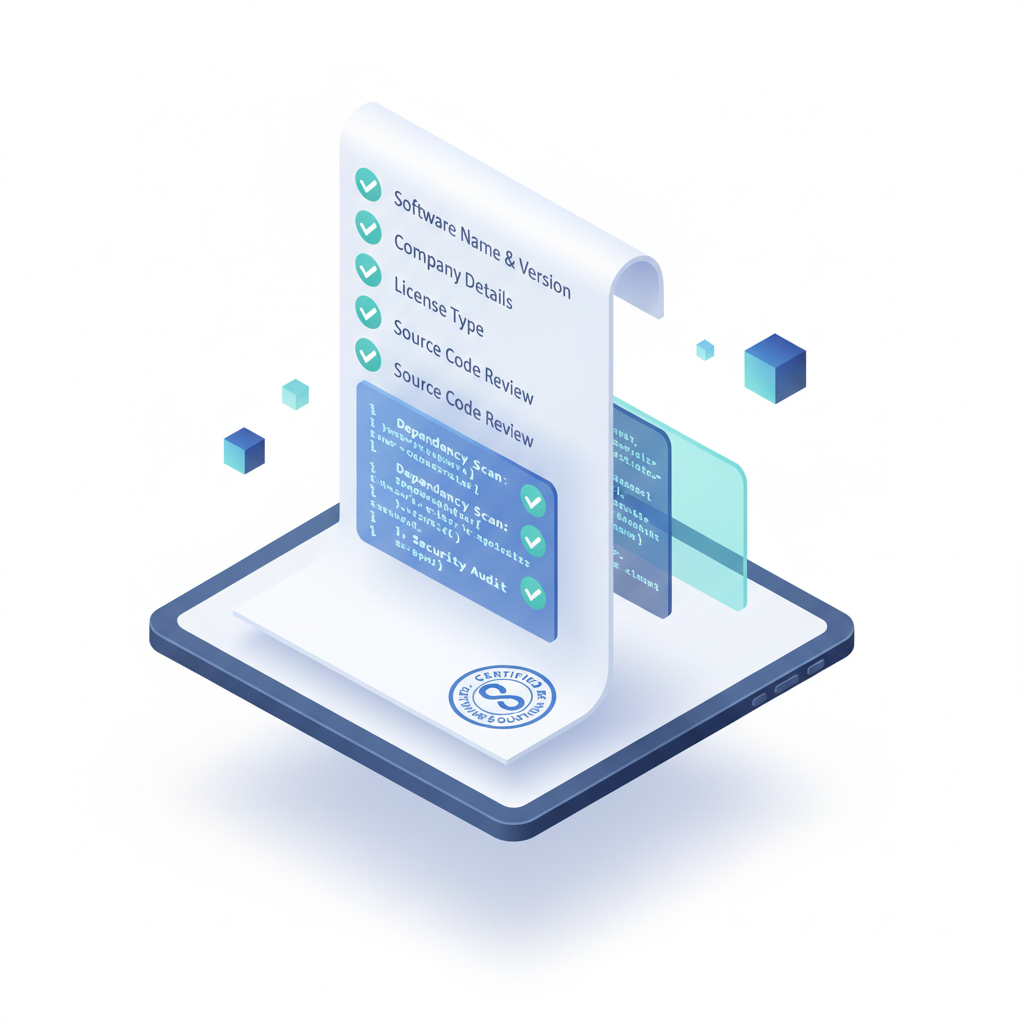
The software legalization process does not begin with filing an application, but with an audit of your internal agreements. You must ensure that every line of code written by hired staff or contractors has legally “moved” to the company’s balance sheet through relevant contracts and acts. Only then can you proceed to compile the documentation package for the IP Office (Ukrnoivi).
To successfully protect a startup’s assets, it is necessary to prepare a description of the work that includes not only fragments of the source code but also a user manual or technical specification. It is important that these documents clearly identify the product. The Brandr team handles the entire bureaucratic process—from preparing the application to obtaining the certificate—which opens the doors to business capitalization while you focus on project development.
Verify the presence of the following items before submission:
- Author agreements: Employment contracts or service agreements (IP Assignment Clauses) with all developers.
- Materials identifying the code: The source text (full or fragments) in a format that allows for unambiguous identification of the object.
- Fee payment documents: Receipts for the payment of state duties for registration and issuance of the certificate.
- Standard application form: Data on the rights holder and author, matching the information in the agreements.
Once the documents are gathered, it is important to understand the technical nuances of the procedure itself to avoid formal rejections by the agency’s experts.
How to navigate the registration process without errors
Successfully submitting materials to the IP Office (UANIPIO) is the final step in establishing the legal foundation for your product. Any inaccuracy when interacting with the regulator can become grounds for refusal or significantly delay the procedure. To avoid common pitfalls, it is worth focusing on the legal integrity of your internal processes before submitting the application.
The registration process involves three key stages: checking formal requirements, having the identification materials for the code analyzed by an expert, and entering the data into the State Register. Since the legislation does not provide for expedited procedures, you should plan for this timeline as part of your strategic asset protection. The main risk for founders lies not in the submission itself, but in the structure of rights: if the code was developed by freelancers or employees without proper assignment agreements, a government certificate will not eliminate the risk of future challenges. This is why professional copyright registration requires a prior audit of agreements with developers.
Legal development hygiene dictates that all property rights to an asset must be consolidated on the legal entity’s balance sheet through acceptance certificates. During Due Diligence, investors examine not only the existence of a certificate but also the «cleanliness» of the entire chain of rights transfer. Please remember that this material is for informational purposes; as legal positions and regulatory requirements may change, we recommend checking the current data on the official IP Office portal before you begin preparing your documents.
Valuation and capitalization of intellectual property
Once rights to the code are officially secured, the question arises of how to transform it into an economic asset. We will explore how intellectual property influences a company’s market valuation and how to build a powerful IP portfolio for a future exit.
How intellectual property affects valuation
In the world of venture capital, intellectual property is not just a legal formality but a key instrument for capitalization. When an investor sees registered rights to the code, they understand they are buying a protected product, not just a team of developers who could leave tomorrow, taking their work with them.
In my experience, a lack of clear title to these assets is the most common reason why deals fall through during the Due Diligence stage. An investor is not afraid of competition; they are afraid of lawsuits from former CTOs or contractors who could block the entire service’s operation a year after the investment. Proper documentation adds significantly more to the business’s value than the cost of the lawyers themselves.
The impact of protected assets on valuation is manifested through several factors that directly influence multipliers during funding rounds:
- Risk mitigation: An official certificate serves as prima facie evidence, relieving the company of the burden of proving authorship in every dispute.
- Barrier to entry: Registered rights allow for more aggressive defense of your niche against clones and copies.
- Balance sheet assets: Intangible objects can be officially appraised and placed on the company’s balance sheet, which improves financial metrics during an audit.
Understanding how the protection of an idea or code converts into capital allows founders to negotiate from a position of strength. The next logical step after evaluating individual modules is the strategic planning of the company’s entire asset portfolio.
Building a Startup’s IP Portfolio
Building a robust portfolio of rights is not just about accumulating certificates; it is about creating a strategic shield where every element reinforces the others. Having already examined how legal clarity impacts business valuation, it is essential to understand the mechanics of consolidating these assets so that no line of code or design decision is left hanging in the air.
A critical moment in building an IP portfolio is ensuring an unbroken chain of title from the creators to the company. Founders often fall into a trap: having a contract with a developer does not automatically mean the startup owns the intellectual property. Under the provisions of the Civil Code of Ukraine, property rights must be clearly identified and transferred through proper transfer acts. Whether you work with freelancers or in-house specialists, every sprint should conclude not just with a push to the repository, but with documentation confirming that the created product now belongs to the legal entity.
For a scaling startup, an IP portfolio strategy usually includes:
- Consolidating rights to source code: registering copyrights (notably through industry-standard providers like Brandr) for key architectural modules as a foundation for security.
- Protecting interfaces and UI/UX: securing the graphic elements that make your product recognizable.
- Contractual framework: integrating confidentiality and assignment of rights clauses into every contract, which helps protect business ideas from theft during the development phase.
- Regular audits: verifying that the volume of code in the repository matches the scope of rights established in legal documents.
This comprehensive approach turns scattered developments into a structured asset ready for scrutiny by the most demanding investors. Proper documentation of rights creates the added value that distinguishes a mature project from hundreds of raw ideas, turning accumulated work into real capital.
Related article: How to protect your business idea from theft using NDAs.
If you need assistance with this task, please use our copyright registration service.
Protect your code today
Properly registering intellectual property for a startup is not just a formality; it is a strategic foundation that transforms code written by developers into a protected company asset and prevents situations where the business de facto belongs to a freelance author rather than the founder. Register your rights with the IP Office (UIPA) now to obtain the official confirmation of authorship required for successful Due Diligence and fundraising. Access the service provided by our team to secure professional copyright registration, and be sure to review our comprehensive IP strategy guide for technology projects, which will help you navigate safely from the first line of code to a profitable exit.
Frequently Asked Questions
Do I need to register copyright for every software update?
Copyright law protects a work from the moment of its creation, so every individual version of software is technically already under protection. However, from the perspective of business security and investment attractiveness, registering copyright for every minor update is neither mandatory nor cost-effective.
It is recommended to follow a registration strategy for key product development milestones:
- Release of the first stable version (MVP).
- Implementation of new architectural modules that significantly alter functionality.
- Expansion into new international markets, where proof of rights is critical for local partners.
Registering major versions creates the necessary “chain of title,” which demonstrates to investors the evolution of ownership rights over the product throughout the startup’s entire lifecycle.
What should I do if part of the code was written using Open Source libraries?
The use of Open Source software is an industry standard, yet it carries certain legal risks. The main issue lies in license compatibility (for example, the strict requirements of GPL-type licenses regarding the “inheritance” of open code).
To protect your product:
- Conduct a component audit: Create a list of all third-party libraries and their license terms.
- Isolate the code: Try to keep your own unique code separate from the open code by using APIs or modular architecture.
- Document authorship: Registering your own code indicates that you are the one who created the unique superstructure on top of Open Source solutions.
If your startup is planning an M&A (merger or acquisition), you will definitely be asked about the “cleanliness” of your Open Source usage during Due Diligence. Having a documented policy for using third-party code is a sign of a mature business.
Does copyright registration protect the application name and its logo?
It is important to distinguish between intellectual property objects: copyright protects the form of expression of a work (the code text itself, interface design), while a trademark (TM) protects the commercial designation — the name, logo, and brand of the product.
Registering copyright for code does not grant you a monopoly on your application’s name. If a competitor names their product similarly, copyright for the code will not help you prohibit the use of that name. To protect your brand, you must register a trademark in Ukraine and, if necessary, in the relevant countries where your business operates.
Is there a difference in rights protection between in-house developers and contractors?
Yes, there is a significant legal difference in how ownership rights arise:
- In-house developers: By default, rights to work-for-hire creations belong to the employer, unless otherwise specified in the employment contract. However, it is important to have clear job descriptions and orders confirming that the code was created as part of official duties.
- Freelancers/Outsourcing: The developer-contractor is the initial owner of the rights. For the rights to transfer to the startup, an IP Assignment Agreement must be signed.
Without an agreement with a contractor, you only hold a “license” to use the code, but not the copyright itself, which is a critical risk when seeking investment.
Can I protect the business idea behind the code?
According to intellectual property regulations (specifically Art. 19 of the Law of Ukraine “On Copyright and Related Rights”), copyright does not protect ideas, methods, processes, or mathematical concepts. It only protects the specific implementation — that is, your source code, design, graphics, and database structure.
To protect the “business idea” itself, a complex approach is used:
- Trade secret regime (NDA): Restricting access to strategic data for employees and partners.
- Patent for invention: Possible only for technical solutions that possess an innovative level, but this is a significantly more complicated and expensive path.
- Development speed and brand: Often, the best protection for an idea is building a recognizable brand and quickly capturing market share.