Patent or Copyright: How to Protect Your Idea?
Making the wrong choice between patenting and copyright when launching a product can cost a startup millions in lost investments or legal fees. In this article, I have prepared a roadmap to help you understand the difference between a patent for an invention and copyright for your business.
Patent vs. Copyright for IT Products
Protecting digital solutions requires a combined approach, where it is important to distinguish between the legal nature of source code and unique technological algorithms. Below, we will analyze when it is appropriate to use copyright registration and when to utilize more complex patenting mechanisms.
When to Protect with Code and When with an Algorithm

In the IT sector, the choice of protection method depends on what exactly you want to monopolize: the specific text of the program code or the logic of the system’s operation itself. Copyright protects the form of expression—how the product is written, its structure, and its interface, which arises automatically from the moment of creation. However, this instrument does not prevent competitors from writing similar functionality in a different programming language. To protect the technical essence, for example, a unique data processing method or a video compression technique, it is better to use industrial property tools.
The difference between patenting and code protection defines your strategy, so it is important to consider the nuances described in the article about the difference in terms and costs. A patent requires passing an examination at the IP office (the Ukrainian National Office for Intellectual Property and Innovations) to confirm the inventive step. This is a complex procedure, but it provides exclusive rights to the technology itself, regardless of its implementation in code.
| Comparison Criterion | Copyright (Code) | Patent (Algorithm/Method) |
|---|---|---|
| Subject of protection | Form of expression (code text) | Technical solution (process logic) |
| Emergence of rights | Automatically (registration confirms the date) | Only after state registration |
| Procedure complexity | Simple, submission to the IP office | Complex, lengthy examination |
| Term of validity | Life of the author + 70 years | Up to 20 years (for inventions) |
Understanding these differences helps avoid critical mistakes that often occur at the startup scaling stage.
Related material on the topic: Patent for an invention or copyright.
Typical Startup Mistakes in Choosing Protection
In the pursuit of a fast release, startups often forget that source code is merely a form of expression, while the product’s true value often lies in unique data processing logic or algorithms. A misunderstanding of the difference between a patent for an invention and copyright protection often leads to choosing code registration alone, leaving the product’s technological essence unprotected from being copied by competitors under a different “shell.”
The most common mistake is publishing an MVP or demonstrating the product at pitch events before securing legal priority. According to Article 7 of the Law of Ukraine “On the Protection of Rights to Inventions and Utility Models,” disclosing information about an invention before filing an application violates the novelty condition—a key criterion for patentability according to the standards of the IP Office (Ukrainian National Office for Intellectual Property and Innovations). As a result, you may hold property rights to the source code, but you will be unable to prevent others from replicating your method of operation.
In addition to disclosure risks, startups often neglect license audits. Using Open Source components can limit the ability to patent one’s own developments. Therefore, a strategic approach is optimal for hybrid products: combined protection, where copyright registration with the IP Office covers the source code, and a patent application covers the technical solution and algorithmic methods.
| Risky Strategy | Legal Consequence |
|---|---|
| Publishing algorithm details before filing | Loss of novelty, inability to obtain a patent |
| Limiting protection to code only (Copyright) | Algorithmic logic remains available for copying |
| Ignoring Open Source license terms | Risk of infringing third-party rights and patent limitations |
Criteria for Selecting the Method of Legal Protection
The choice between patenting and copyright depends on the nature of your asset. If you have created an object that has a technical essence—such as a new data processing method or algorithm—it is advisable to consider a patent, which provides a monopoly on the technology regardless of the programming language. At the same time, registering copyright is better for establishing authorship of source code or graphic interfaces, providing quick confirmation of the creation date.
To properly classify your asset, analyze whether your product is a technical solution (invention) or a creative expression (work). Misclassification can lead to legal vulnerability: for instance, attempting to use copyright to protect the logic of an algorithm instead of patenting it will not prevent competitors from developing an identical product with different code. According to the requirements of the IP Office (UANIPIO), objects that do not meet the inventive step requirement are not eligible for patenting; therefore, focusing on the form of expression remains the most reliable tool for protecting creative IT products.
Checklist: Analyzing Your Intellectual Property Object
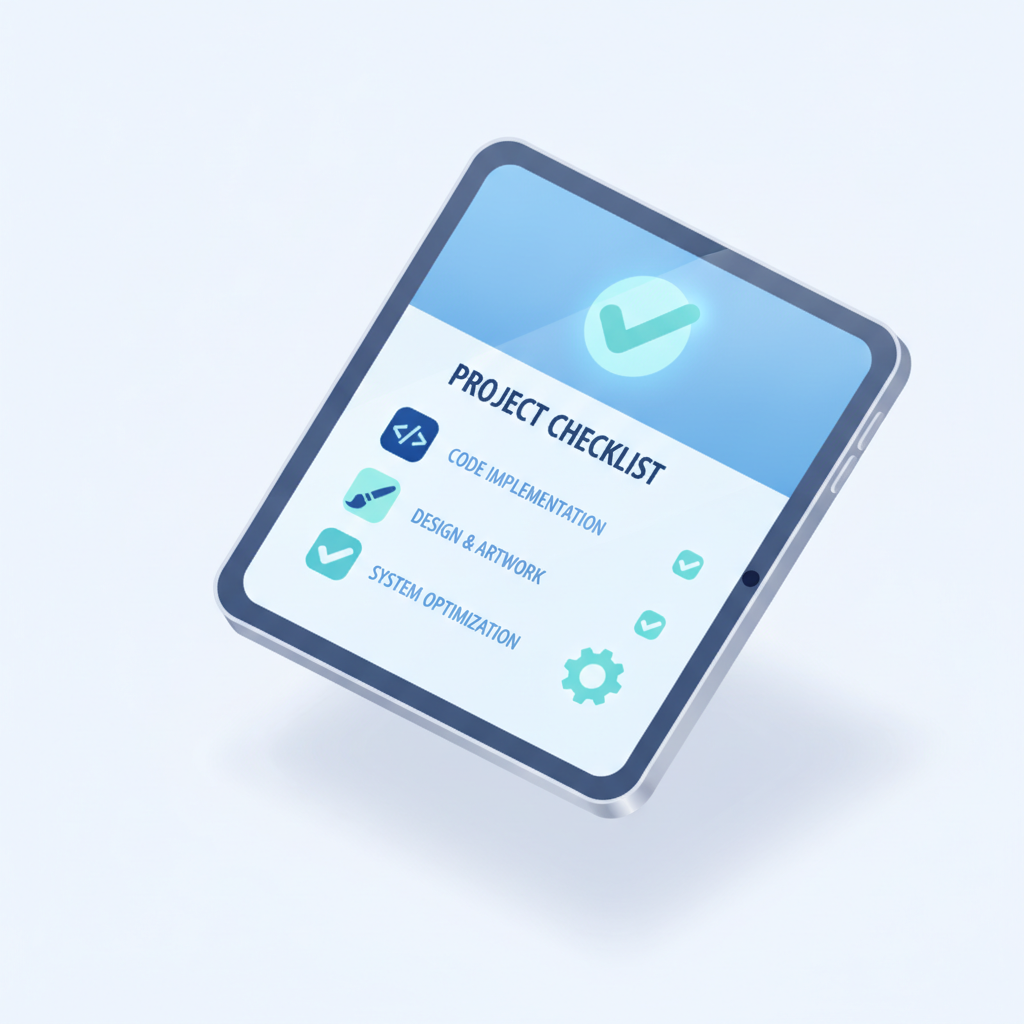
Before investing resources in drafting documents, it is necessary to clearly identify what constitutes the core of your product: aesthetic embodiment, source code, or a technical function. The choice of protection mechanism depends on how deeply your solution changes existing processes and whether it meets legal requirements.
- Originality Analysis: Check if your work is the result of creative activity. To protect literary or artistic works, it is important that the form (text, design, interface) is not copied. Unlike patenting, a technical breakthrough is not required here—a unique execution style is sufficient.
- Verification of Industrial Applicability: Can your invention be reproduced in industry or another field of activity to achieve a specific technical result? This is a key requirement for obtaining a patent.
- Material Embodiment of an Idea: Remember that neither a patent nor intellectual property rights protect “bare” ideas. The object must be recorded: for a patent, in the form of a description of the design or method; for creative objects, in the form of a manuscript, code, or image.
- Assessment of World-Level Novelty: If you are planning to patent, the solution must not be known anywhere in the world before the filing date. In the field of copyright, the rules are more lenient—it is enough that you did not use someone else’s work, even if someone else created something similar in parallel.
- Determining the Inventive Step: Answer the question: is your solution obvious to a specialist in this field? A patent for an invention is granted only when the development significantly advances technology, rather than being a simple combination of known elements.
Passing this filter will help you understand whether you should aim for a 20-year monopoly or if it is better to focus on protecting the visual component. For example, if you have developed a unique packaging shape, you should consider the difference between a product design and an invention, as the scope of rights depends on this. To obtain professional advice on registration, it is recommended to contact the IP Office (Ukrainian National Office for Intellectual Property and Innovations), which minimizes risks resulting from incorrect legal classification of assets.
Risks of improper asset classification
Once you have defined the nature of your product, there is a temptation to choose the fastest route for protection. Many mistakenly believe that registering a creative work is sufficient for a development, as this procedure is simpler and cheaper than patenting. However, ignoring the technical essence of an asset creates a critical vulnerability that competitors can easily exploit.
Risk: reproducing technology without copyright infringement
Consider a real-life case: a company developed a unique mechanism for an industrial filter. Instead of patenting the invention, the developers merely protected the technical drawings as intellectual property objects. Competitors purchased a sample, performed reverse engineering, and released a similar device. Legally, they did not violate the company’s rights because they did not copy the graphics of the drawings; rather, they reproduced the technical idea, which is not protected by creative work regulations.
According to clarifications from the IP Office, legal protection applies only to the form of expression, not to ideas, methods of operation, or structural solutions. If your competitive advantage lies in a new technical solution, only a patent can secure a monopoly on the use of the development.
| Factor | Copyright | Patent for invention |
|---|---|---|
| Object of protection | Form of expression (text, code, drawings) | Technical solution, operating principle |
| Resistance to reverse engineering | Low (does not protect the method) | High (prohibits the use of the method) |
| Role for investors | Confirmation of asset creation | Protection of commercial monopoly |
Note: This information is for reference purposes only. An IP protection strategy requires an analysis of the specific technical features of the object by an intellectual property specialist.
Related material on the topic: Product Design.
Practical steps for protecting rights
Protecting assets begins with specific legal actions, the first step for a business being the registration of copyright. Below, we will analyze a step-by-step algorithm for obtaining a certificate and identify instances where the involvement of a professional lawyer is indispensable.
Step-by-step algorithm for authorship registration
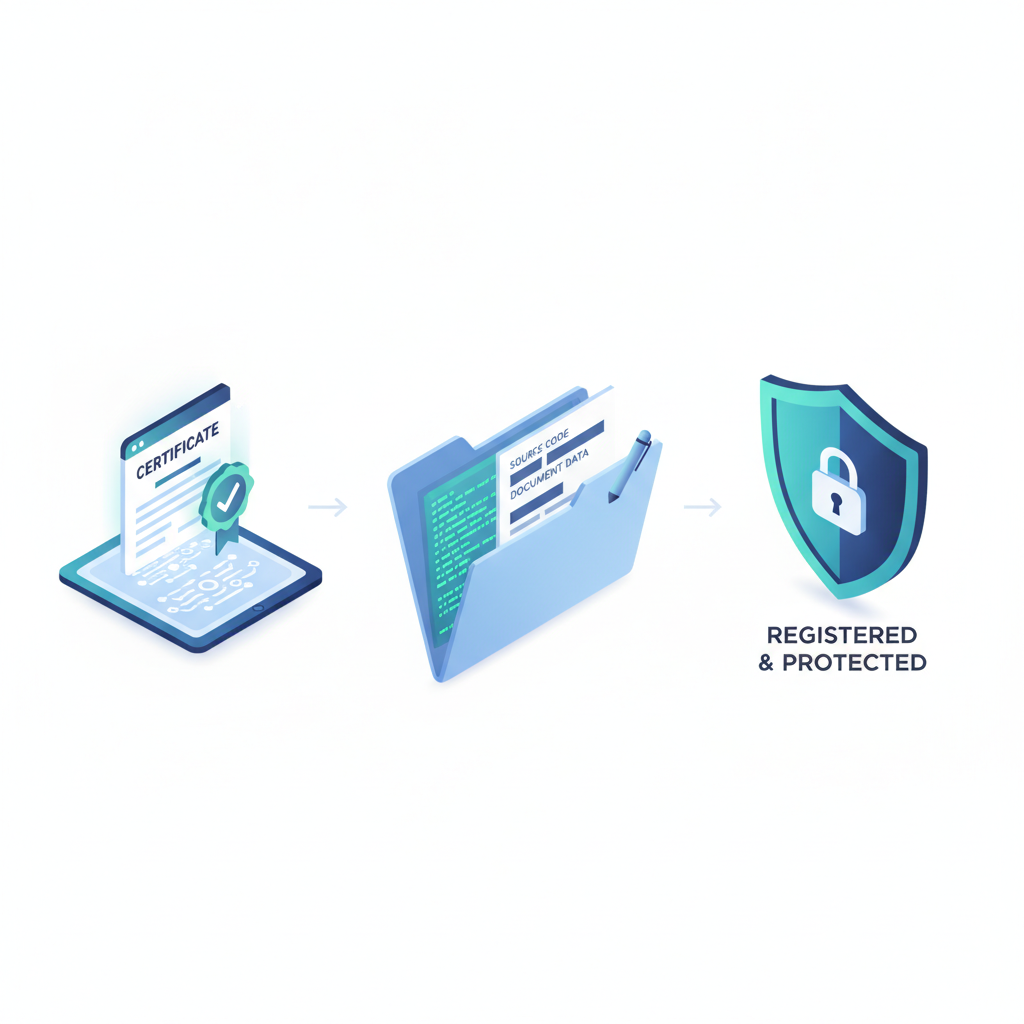
As part of the practical steps to protect your rights, state registration of authorship with the IP Office is an effective tool for formalizing your status. Since protection arises automatically from the moment a work is created, registration does not “create” the right, but provides official documentary confirmation. Holding a certificate is your “body armor” in court and during negotiations with investors: it clearly certifies the date the right emerged and resolves most questions regarding priority.
The process of obtaining legal protection consists of several logical stages, each requiring attention to detail to avoid registration refusal:
- Preparation and depositing of a copy of the work. You must fix the object (text, code, image) in a material form. This could be a printout of the code or saving files to a medium, which is submitted along with the application.
- Submission of the application to the IP Office. The document package includes the application, a copy of the work, and documents confirming the payment of state fees. It is important to correctly identify the subjects: who is the author and who is the owner of the economic rights (e.g., the employer company).
- Examination and receipt of the certificate. The state office checks the compliance of the documents with formal requirements. After a successful review, you receive a Certificate of Copyright Registration for the work.
It is important to understand that the timelines and costs of registration differ significantly from patent procedures, making this tool ideal for startups in the early stages. Having such a document significantly strengthens your position when defending against plagiarism and simplifies the drafting of license agreements. However, there are situations where a formal algorithm is insufficient, and a deeper legal examination is required.
When to consult a lawyer
Even with a clear algorithm in hand, business owners often encounter pitfalls that cannot be predicted without a deep understanding of case law and the regulations of the IP Office (UIPA). Legal support is needed not just for filling out forms, but for strategic analysis: whether the chosen path of protection truly closes all loopholes for competitors. For instance, an incorrectly defined object in an application can lead to you receiving a certificate that carries no real weight in court when you try to stop plagiarism.
Professional legal assistance is not just outsourcing paperwork, but the preventive mitigation of risks. A qualified expert sees weaknesses in an object’s description even before documents are submitted, which saves months of waiting and the funds that could have been spent on repeat applications after a refusal to issue a patent or certificate.
Engaging a specialist becomes critically necessary in the following situations:
- Complex hybrid products: when an IT solution contains both unique code and a technical invention, requiring the simultaneous registration of different forms of ownership.
- Freedom to operate analysis: checking whether you are accidentally infringing on existing patents of third parties, which is especially important for startups before entering new markets.
- Drafting contracts: developing license agreements or contracts for the transfer of property rights, where every nuance impacts the company’s future capitalization.
- International protection: if your ambitions extend beyond Ukraine, a lawyer will help choose the optimal procedure (e.g., via the PCT treaty or the Madrid system) without unnecessary expenses.
Competent asset structuring from the start allows you to avoid exhausting lawsuits in the future and makes your business understandable to investors, who always evaluate the quality of a company’s legal foundation.
If you need help with this task, use our copyright registration service.
Choose your protection strategy today
Understanding the difference between a patent for an invention and copyright turns legal formalities into a powerful tool for capitalizing your business, where each asset works to increase the company’s value. Do not hesitate, as in the realm of intellectual property, time works against you: while you waver, competitors may patent a similar solution or borrow unprotected code. Therefore, obtaining a registration certificate for authorship or filing an application for an invention should be your priority. Choose your protection strategy today to turn your ideas into protected assets that will ensure your project’s long-term security and market advantage.
Frequently Asked Questions
Can a commercial idea or business model be protected by a patent or copyright?
Under current Ukrainian legislation, as in most jurisdictions worldwide, a pure idea or business model is not eligible for legal protection through either copyright or patent. Copyright protects only the specific form of expression (text, code, design), while a patent protects a technical solution that has industrial applicability.
What you can do for protection:
- For business models: Use non-disclosure agreements (NDAs) and non-compete agreements with partners and employees.
- For software: Protect the source code as a literary work (via copyright registration).
- For unique processes: If a business process is implemented through a technical system (e.g., a data processing algorithm that provides a technical result), you can attempt to patent it as an invention or a utility model.
Remember: legally, it is the embodiment that is protected, not the concept.
What is an NDA and why is it critically important before registering intellectual property?
An NDA (Non-Disclosure Agreement) is a confidentiality agreement that obligates the party receiving information not to disclose it to third parties or use it for their own purposes without the owner’s permission.
For a startup in the development stage, an NDA acts as a “shield” because:
- It serves as evidence in court if a former partner or developer attempts to misappropriate your product.
- It prevents the premature disclosure of technical specifications that you intend to patent. If you discuss your invention at a public pitch without a signed NDA, you will lose the “novelty” status required for patenting.
- Signing such an agreement disciplines the team and emphasizes the seriousness of your intentions to protect your assets.
Should I register copyright if my software is constantly being updated?
Absolutely. Software is an object that is constantly evolving, so it is important to understand that copyright registration secures authorship of a specific version of the code as of a specific date.
Recommendations for dynamic projects:
- Register every major update that significantly changes the product’s structure or functionality.
- Maintain internal development documentation (architectural decisions, version descriptions) that confirms your work on the code throughout the entire process.
- Use the certificate of registration as a tool to quickly prove your rights in the event of disputes with contractors or competitors.
Even with frequent updates, having registered base versions of the product creates the necessary legal foundation to protect the entire project.
Is there a difference in protection for mobile apps and websites?
From a legal perspective, mobile apps and websites are protected comprehensively through a combination of several intellectual property tools:
- Copyright: protects the source code, interface design, icons, text content, and graphic elements.
- Trademarks: protect the app name, logo, and slogan, which is critical for brand identification in the market.
- Patent Law: applicable only in cases where the app or website uses a unique, non-obvious technical method of operation (e.g., a specific way of encrypting data or a unique information transmission algorithm).
For most digital products, the basic step is to register rights to the code and file for a trademark so that competitors cannot copy your visual identity and name.
How does international patenting affect a startup’s business strategy?
Entering international markets requires an understanding that intellectual property rights are territorial. A patent obtained in Ukraine is only valid in Ukraine. To enter global markets, developers should consider:
- The PCT system (Patent Cooperation Treaty): it allows you to file a single international application, which essentially “reserves” your place in most countries around the world, giving you time to decide on specific countries for registration.
- Costs: international patenting is an expensive and time-consuming procedure. Therefore, startups should carefully select target jurisdictions where active product sales are planned.
- Priority: international applications are usually based on the date of the first filing in the country of origin. Therefore, it is important to take the first step in Ukraine correctly and on time.
We advise starting with an assessment of the product’s patent freedom before investing funds in international registration to avoid infringing on the existing rights of foreign companies.