Patent for a Cafe Name: Myths and Reality
Many business owners mistakenly believe that a patent for a cafe or restaurant name guarantees protection against competitors. In reality, a brand requires trademark registration, and we wrote in detail about a systematic approach to this issue in our article on intellectual property protection for designers and illustrators.
Why a Business Name Cannot Be Patented
In the legal field, the term “patent” applies to inventions, while a business name is protected through the trademark registration procedure. Below, we will break down the fundamental difference between these concepts and explain why a name is the most important asset of your business.
Difference Between a Patent and a TM
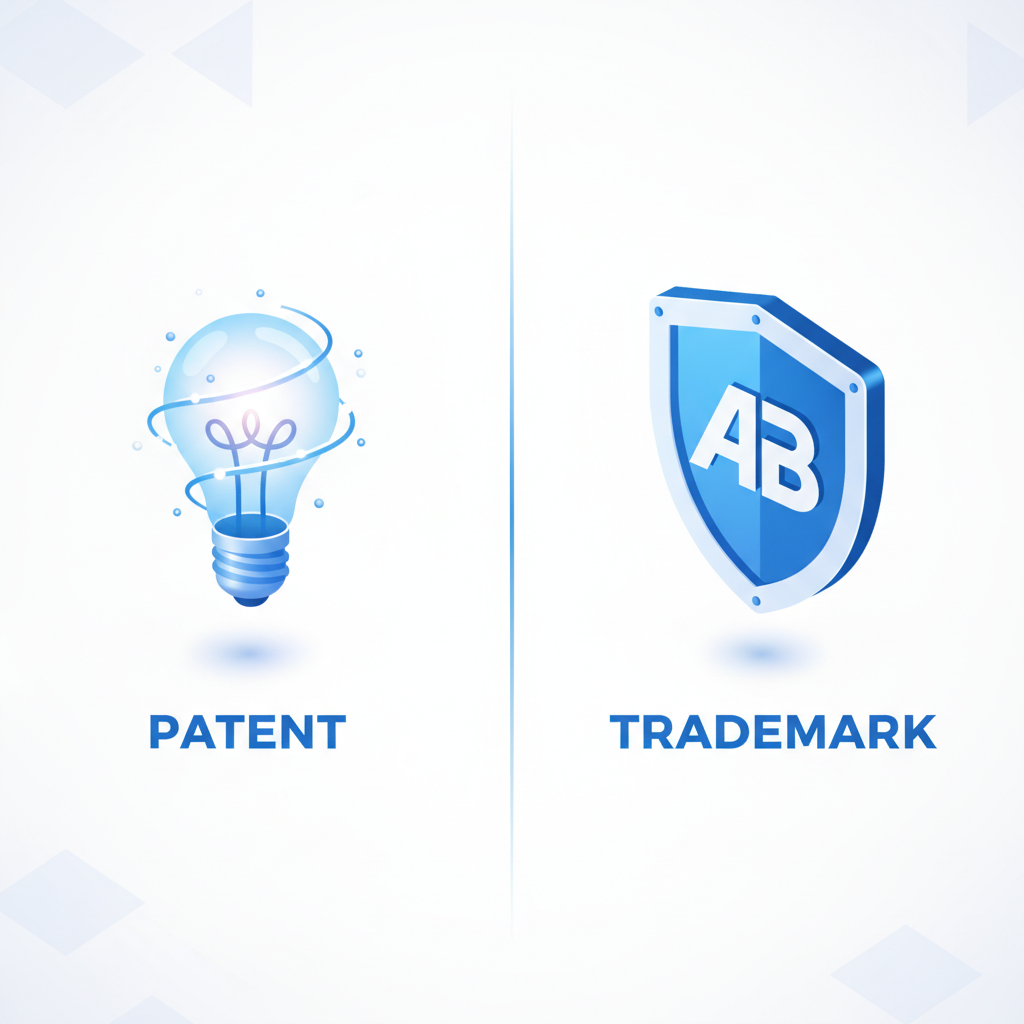
It is important to distinguish between concepts: “patent for a name” is a legally incorrect term. Patenting is intended exclusively for technical solutions and innovations, while names, logos, and brands are protected through trademark (TM) registration. To avoid mistakes when creating a brand, familiarize yourself with the basics of intellectual property.
| Criterion | Trademark (TM) | Patent |
|---|---|---|
| Object of protection | Name, logo, brand | Invention, utility model |
| Purpose | Distinguishing goods/services from competitors | Protection of a technical solution |
| Validity period | 10 years (renewable) | Limited (from 5 to 20 years) |
If you plan to enter the HoReCa market, remember that timely trademark registration allows you to secure rights for your establishment for decades to come. This is a reliable foundation that eliminates the risk of losing your brand due to unfair competition. Understanding that a name is a capitalized asset will help you build a more effective development strategy.
Related material on the topic: Intellectual Property Protection for Designers and Illustrators in 2026.
Why Your Name is Your Main Asset
Your name is not just an inscription on a sign, but a fundamental intangible asset that shapes your reputation and allows customers to identify your establishment among hundreds of others. If you have not taken care of official protection, you risk losing the right to use your own brand due to the actions of competitors. Unlike technical inventions that require specific legal regulation, trademark registration is the only effective mechanism for brand names. We have repeatedly observed situations where cafe owners invested huge sums in interior design and marketing, only to be forced into a complete rebranding after third parties registered an identical name for themselves.
Imagine a situation: you opened a restaurant with a catchy name, ran a large-scale advertising campaign, and six months later received a claim from a “patent troll” who registered a similar designation earlier. In such a case, talk of a “patent” for a name is a legal illusion, as only a trademark works in the legal field. Registration allows you to legally prohibit other market participants from using your brand, avoiding losses associated with rebranding.
To avoid such risks, it is important to approach the matter strategically, which we will discuss further in the section on steps to protect your establishment’s name.
Related material on the topic: Industrial Design Protection.
Steps to Protect a Cafe Name
Obtaining legal protection for a brand requires a clear algorithm of actions, as professional trademark registration removes the bureaucratic burden and risks of losing rights. The following steps include a detailed analysis of your name’s uniqueness and filing an application with the patent office.
Checklist for Checking Name Uniqueness
Before submitting documents, it is important to ensure that the chosen word or logo does not infringe on the rights of third parties. A thorough audit will help avoid registration refusal and protect your investments at the launch stage.
- Search the Ukrpatent database: Checking the name against official registers to identify similar designations that already have legal protection.
- Selection of Nice Classification classes: For catering establishments, Class 43 is mandatory, covering restaurant and cafe services.
- Assessment for identity and similarity: Analysis not only by text match but also by phonetic, visual, and semantic similarity.
- Analysis of registrability: Checking whether the name is a generic term that cannot be monopolized by one business.
For a successful procedure, we recommend following these stages of application submission:
- Preparation and submission of the application to the IP Office.
- Formal examination (checking the correctness of document preparation).
- Substantive examination (checking the name for compliance with registrability criteria).
- Issuance of the trademark registration certificate.
Remember that the main mistake of many business owners is attempting to file an application without a preliminary professional search, which increases the risk of refusal due to similarity with existing brands.
Application Procedure in Ukraine
After a successful name audit, the procedure for acquiring brand rights in Ukraine starts with filing an application to the Ukrainian National Office for Intellectual Property and Innovations (IP Office). A key stage is correct classification according to the Nice Classification — for catering establishments, Class 43 is mandatory, but for comprehensive protection, classes covering souvenir products, delivery, or online services are often added.
To delegate technical aspects, including the correct formation of the list of services and monitoring of review stages, use our online trademark registration service, which allows you to avoid refusals due to procedural inaccuracies.
Application stages:
- Application filing: registration of documents at the IP Office and payment of fees.
- Formal examination: checking documents for compliance with established requirements.
- Substantive examination: checking the name for compliance with registrability criteria (uniqueness, lack of descriptiveness).
- Decision and registration: obtaining a certificate of ownership of the trademark.
Typical mistake: filing an application for only one country when planning expansion into foreign markets. Although internal registration is a basic step, for international protection, you should consider the Madrid System. Always keep in mind that registration is a long administrative process, so it is strategically important to file documents even before entering the market and publishing the name on social networks to prevent the actions of unscrupulous competitors.
Risks Without Official Registration
The lack of official protection for your establishment’s name creates vulnerability to external threats that can destroy your reputation. Below, we will analyze unfair competition and the irreversible loss of investments in branding due to the lack of registration.
Unfair Competition and Clones
Imagine a situation: your establishment becomes popular, and a competitor registers an identical name, demanding that you stop using it or pay compensation. In the absence of official status, you find yourself in a defensive position and are often forced to carry out a forced rebranding. At the same time, timely trademark registration secures the exclusive right to the brand, which allows you to block the activities of “clones” in accordance with the requirements of the Law of Ukraine “On the Protection of Rights to Marks for Goods and Services”.
| Scenario | Consequences for business |
|---|---|
| No registration | Risk of becoming a victim of “patent trolls” who block the use of the name, websites, and customer base through preemptive registration. |
| TM certificate present | Full legal control: the right to prohibit the use of the brand by third parties and claim damages through the IP Office. |
Loss of Branding Investments
In addition to risks associated with your style being copied by other market players, ignoring the official securing of rights poses a serious threat to your capital. Rebranding under judicial pressure is not just changing a sign, but a real financial disaster for a business operating in the HoReCa segment.
As a lawyer with many years of experience, I often observe how cafe owners spend thousands of dollars on design, interior, and marketing, but do not allocate a small part of the budget to the legal security of the brand. When you receive a lawsuit demanding that you stop using the name, the costs of a complete identity change, legal services, and reputational losses can exceed the cost of registration by dozens of times.
You may face a situation where a third party — a so-called “patent troll” — registers an identical designation before you. The consequences of such a scenario are critical:
- Forced cessation of the use of a name that has already become recognizable among your visitors.
- Loss of investments made in advertising, printed materials, and signs that become “illegal”.
- Risk of receiving demands for compensation for the use of someone else’s intellectual property.
Remember that a legal audit at the brand creation stage is your insurance policy. It allows you to timely identify conflicts with already registered trademarks and minimize risks associated with forced rebranding or lawsuits.
If you need help with this task, use our trademark registration service.
Act Proactively: Protecting Your Restaurant
Trademark registration is not just an expense, but a reliable foundation for the security of your business, which makes the actions of patent trolls impossible and protects against forced rebranding. Although there is no such concept as a patent for a cafe or restaurant name in the legal field, timely registration of a trademark gives you exclusive control over the brand for the next 10 years with the right to further renewal. If you plan to develop further, we recommend familiarizing yourself with the nuances of how intellectual property protection for designers and illustrators is carried out, as well as preparing to study industrial designs through our article on product patenting. Remember that the legal certainty of your business begins with the first step — official registration.
Frequently Asked Questions
Do I need to register an Instagram shop or YouTube channel name as a trademark?
Yes, trademark (TM) registration for online projects is critical, especially if you plan to scale or monetize. Although social networks have their own community rules regarding copyright infringement complaints, they do not grant you legal ownership of the name under Ukrainian law.
TM registration for an Instagram shop or YouTube channel gives you the following advantages:
- Legal basis for removing clone pages: You can officially appeal to platform administrations (Meta, Google) with a demand to remove accounts that copy your brand, relying on the TM registration certificate.
- Protection against blocking: You get tools to protect your own content and name from claims by third parties who may try to “seize” your brand first.
- Asset capitalization: A trademark becomes an intangible business asset that can be valued, sold, or transferred under a license agreement.
Why register a trademark for a small business if I work locally?
Many small business owners believe their brand is too small to be stolen, but this is a dangerous mistake. TM registration acts as an “insurance policy” for your business:
- Avoiding forced rebranding: Even if you operate on one street, a competitor can register your name for themselves. After that, they have the legal right to demand that you dismantle signs, change the name on your website, social networks, and packaging. The costs of such a brand change far exceed the cost of trademark registration.
- Customer and partner trust: The presence of the © or ® symbol demonstrates the seriousness of your approach, which is important for building a reputation.
- Protection in relationships with landlords and suppliers: An officially registered brand facilitates contract signing, as you act as a legal rights holder.
Does trademark registration give the right to obtain a .ua domain?
Yes, in Ukraine, registering a domain in the .ua zone is possible only if you have a trademark certificate. This is one of the most effective ways to protect your digital brand.
Registering a .ua domain confirms that the name belongs to you and makes it impossible for a competitor to buy an identical name in this zone to intercept your traffic. Since .ua is a trusted zone, it also positively affects SEO promotion and user loyalty, as they see that your site is officially verified.
How to protect a unique interior design or food presentation?
Although a trademark protects the name and logo, the visual component of a restaurant requires other intellectual property protection tools:
- Industrial designs: If you have unique furniture, designer lamps, or custom tableware, they can be protected as industrial designs. This will prohibit others from copying the appearance of your products.
- Copyright: Original interior sketches, food photographs, or menu designs are protected by copyright from the moment of their creation. For more reliable protection, it is recommended to record the fact of the work’s creation (e.g., through deposit).
- Confidentiality (NDA): Avoid sharing interior blueprints with contractors without signing non-disclosure agreements to prevent premature copying of your ideas by competitors.
How does monitoring new competitor trademarks work?
Monitoring is proactive protection for your brand. It consists of regularly checking new applications filed with the IP Office. If someone tries to register a similar name that could mislead consumers, you get the opportunity to react in time.
What can be done during monitoring:
- Filing an opposition: Within 3 months after the application is published, you can file an opposition, stating that it violates your rights as the owner of a previously registered brand.
- Pre-trial settlement: Often, an official warning letter is enough for the other party to change the name before the certificate is issued, which saves time and money for both parties.