Design as an Asset: Why a Designer Needs a Patent
In 2026, unique aesthetics are becoming the most valuable capital, which competitors try to misappropriate faster than you can present your portfolio. We will explore how to turn a visual solution into an industrial design and protect your ideas from copying.
What is an Industrial Design Patent
To build a reliable “armor” for a product, it is important to understand the boundaries of its legal protection. Below, we will clarify which objects are subject to registration and how a visual form differs from a product’s technical function.
Objects Subject to Patent Protection
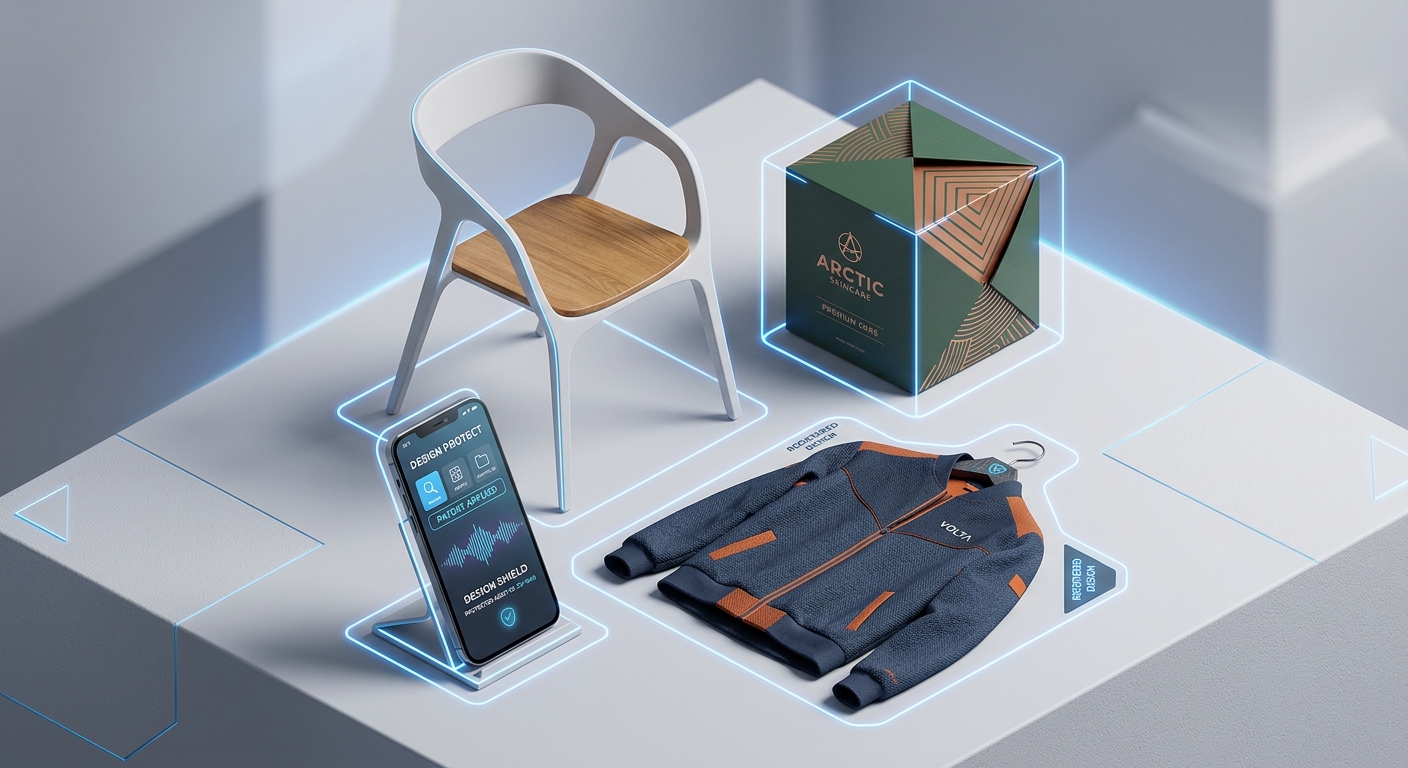
Patent protection covers the appearance of a product—its contours, colors, and specific texture. It is important not to confuse this with copyright: registration grants a monopoly on the use of the form in commercial circulation, which is critical for scaling a business. At brandr.legal, we help designers verify whether their solution is novel enough to obtain a certificate, as the IP Office (UANIPIO) examination pays special attention to originality.
- Furniture and interior items (from designer chairs to chandeliers).
- Clothing, footwear, and accessories (unique cuts or decorative elements).
- Mobile app interfaces and icons (GUI).
- Fonts and graphic symbols.
- Product packaging — even a standard box with unique geometry can be registered as an industrial design.
Reliable intellectual property protection for designers and illustrators begins with an audit of visual assets. If you are creating a comprehensive brand, parallel registration of a trademark for the name along with patenting the product form will create a double security perimeter. When it comes to specific industries, such as a patent for a cafe or restaurant name or the design of their branded tableware, this approach effectively blocks attempts by unscrupulous competitors to copy your concept.
Understanding exactly what we are protecting—aesthetics or mechanics—determines the choice between a patent and other protection tools.
This aspect is covered in more detail in a separate article: Intellectual Property Protection for Designers and Illustrators in 2026.
This aspect is covered in more detail in a separate article: Patent for a Cafe or Restaurant Name: How to Protect Your Signage.
Difference Between Form and Function
Patent protection always focuses on what we see, not how it works inside. If you have developed a chair with an innovative leg shape that makes it recognizable, that is the realm of design. However, if those legs fold using a secret hinge mechanism, such a mechanism requires protection as an invention or utility model.
For designers in the HoReCa sector or product modeling, it is critical to understand: an industrial design will not give you a monopoly on the idea of making furniture itself. It will protect only the specific visual embodiment—the lines, proportions, and color combinations that make your product unique on the market. Within the scope of legal support, we often encounter authors trying to “close” functionality with a patent, but the IP Office examination clearly separates technical solutions from aesthetic ones.
| What we protect | Type of legal protection | Object of protection |
|---|---|---|
| Appearance | Design Patent | Contours, colors, material texture |
| Technical principle | Invention / Utility Model | Construction, method of operation, mechanism nodes |
For authors working on commission, it is important not only to distinguish between form and function but also to correctly transfer rights for intellectual property protection for designers and illustrators so that the client receives the “visual armor” they expect. Understanding this boundary allows for building a development strategy without illusions about what exactly you control in the market, and smoothly transitioning to the question of why the simple fact of creating a work is often not enough.
Why Copyright Is Not Always Enough
Although the law protects a design from the moment of its creation, a patent provides the owner with a much stronger presumption of right in legal conflicts. Below, we will examine the advantages of registration when blocking copies and cases where you cannot do without a paper certificate.
Advantages of a Patent in Blocking Copies
When a designer product enters international marketplaces (Amazon, Etsy), the appearance of “clones” is a matter of time. In the digital environment, copyright often proves cumbersome: proving the date of creation and authorship through file metadata can take weeks. Having a patent provides a legal advantage that platform algorithms recognize instantly.
Expert Insight:
“With a valid patent in hand, we block counterfeit goods on international platforms in a matter of days. Without it, legal correspondence can drag on for months while your sales are taken by low-quality copies,” — Anton Polikarpov.
Practical case: One of our clients, a designer of custom lighting fixtures, discovered over 10 copycat stores on Etsy using his visual solutions. Thanks to the patent number, a complaint filed through the Etsy Reporting Portal was processed in 48 hours, leading to the complete removal of the violators’ listings without going to court.
According to the Law of Ukraine “On the Protection of Rights to Industrial Designs”, registration grants the owner the exclusive right to prohibit others from using the design. This creates a foundation for using automated protection systems:
| Protection Tool | Without a patent (copyright only) | With an industrial design patent |
|---|---|---|
| Amazon Brand Registry | Limited access, difficult to prove rights. | Priority blocking via Patent ID. |
| Reaction speed | From 2 weeks to several months. | From 24 to 72 hours. |
| Legal force | Requires originality examination. | Presumption of validity of the certificate applies. |
In addition to protecting the product form, it is important for entrepreneurs to understand what trademark registration offers small businesses in combination. If a patent protects the appearance, then a proprietary brand allows you to effectively solve the issue of how to protect a store name from copying and avoid manipulation by competitors. Combining a patent and trademark registration creates an “armored” asset that is virtually impossible to attack without serious consequences for the violator.
This material is for informational purposes only and does not constitute individual legal advice. The effectiveness of blocking on a specific platform depends on its internal policy and the completeness of the evidence provided.
When to Choose a Patent
For niche projects in the HoReCa sector or designer goods, a patent becomes the foundation of commercial security, especially when the visual identity of the establishment or product is its main capital. If you are creating serial products, the copyright that arises automatically is often insufficient for effective business scaling.
- Serial production: do you plan to manufacture more than 50 copies of the product per year? For mass production, the legal presumption of a patent is critical.
- Sales geography: are you planning to export goods to EU or US markets? International protection requires clear fixation of design rights.
- Risk of plagiarism: is the form of your object so attractive and concise that competitors can easily reproduce it without significant costs?
Intellectual property protection for designers and illustrators in this case turns into a strategic investment that allows you to avoid claims from so-called “patent trolls.” Having an official registration document for an industrial design significantly increases the capitalization of your creative portfolio and simplifies negotiations with investors. However, before preparing documents, it is worth checking whether your object meets the strict criteria for patentability.
Criteria for Patentability of Your Unique Product
Not every creative idea can receive the status of an officially protected object, as the law imposes clear requirements on design. We will analyze how global novelty and the individual character of the product affect the success of patenting your idea.
Global Novelty and Its Verification

Global novelty is the “zero stage” of any patenting process. An industrial design is considered new if no identical object has become publicly available in the world before the date of your application. According to the practice of the IP Office (UANIPIO), the source of disclosure can be anything: from a publication in an international exhibition catalog to an Instagram post or a portfolio on Behance. If the design has already “appeared” online more than 12 months ago, obtaining a valid patent will be impossible due to the loss of novelty.
Checking databases before submitting documents is not a formality, but a way to save budget on fees and legal services. In addition to the product form, we recommend taking care of naming simultaneously. For example, comprehensive trademark registration helps solve the issue of how to protect a store name from copying or fix the name of a furniture line, which trademark registration provides to small businesses as a foundation for further scaling.
Checklist for self-checking novelty:
- Global Design Database (WIPO): search through international registrations under the Hague System.
- DesignView (EUIPO): the largest database of industrial designs in EU countries.
- Specialized Google Lens and Pinterest search: allows you to find visually similar products on Amazon or Etsy marketplaces that have not yet entered official registers but already deprive your product of novelty.
Case study: our client from the furniture design industry developed a unique chair for restaurants (HoReCa). During an in-depth search in the EUIPO database, we discovered a registered design by a Polish studio with identical leg geometry. This allowed the designer to make constructive changes to the model in time before launching serial production, avoiding a lawsuit from a foreign rights holder.
Understanding the global market protects not only against registrar refusals but also against “patent trolls” who might register your unprotected design for themselves. Combining a product patent with brand protection (TM) creates a double security perimeter, especially when TM registration is needed to obtain a .ua domain or enter international marketplaces.
Disclaimer: The material is for informational purposes. A final conclusion regarding novelty can only be provided by a patent attorney after conducting a professional search in closed and open registers.
Individual Character as a Legal Category
If novelty determines the physical absence of analogs in the past, then individual character focuses on the psychology of perception. Legally, this is based on the concept of the “overall impression” that an industrial design makes on an informed user. Such a user is not a random passerby, but also not a professional art critic. This is a person who regularly buys similar goods, knows the main trends, and pays attention to details that distinguish one brand from another.
Case study in furniture design
One of our clients developed an ergonomic chair with a unique backrest shape resembling a petal. A competitor released a similar model, changing only the angle of the legs and the upholstery material. In court, we proved that for an informed user, these minor technical changes do not alter the overall impression of the silhouette. Since the “petal” shape was the dominant element forming the individual character of the product, we were able to stop the sale of the plagiarism and collect compensation. This confirms: the law protects not the sum of lines, but the holistic visual image.
When assessing individual character, the degree of the author’s freedom is taken into account. If you are creating a coffee machine design where the button placement is dictated solely by ergonomics and internal boards, the threshold for uniqueness will be higher. But in the furniture or decor industry, where the space for creativity is almost limitless, experts evaluate much more strictly whether your solution truly offers a new visual experience. Understanding these nuances helps to prepare the object description in such a way as to emphasize the most characteristic features that will be difficult for competitors to challenge.
Having determined that your design truly has an individual character, it is time to dive into the technical nuances of interacting with the state registrar.
Algorithm for Registering an Industrial Design in Ukraine
Moving from legal theories to practice requires a clear roadmap. Let’s look at the stages of document preparation and analyze the financial and time costs that accompany the path from an idea to receiving a state certificate.
Preparing the Ideal Application in 5 Steps
The process of legalizing a design solution in Ukraine begins with painstaking work on the application materials. The quality of visualization and the precision of wording directly affect how broad your scope of protection will be. Even the most brilliant product can be left defenseless if its essential features are incorrectly defined in the documents submitted to the IP Office.
- Creating a graphic package. It is necessary to prepare a set of images (photographs or computer renders) that give a complete idea of the product. It is optimal to submit seven angles: front, back, left, right, top, bottom, and isometric views. It is important to use a neutral background so that nothing distracts from the object itself.
- Choosing classes according to the Locarno Classification. This is an international standard that groups products by their purpose. For example, if you are registering a bottle shape, you will need class 09 (packaging). A mistake at this stage can lead to protection not being effective in the niche where you actually operate.
- Preparing a description of essential features. Here, the lawyer records all aesthetic features: contours, color scheme, material texture. The description must be precise enough to identify your object, but not too narrow so that competitors cannot “bypass” the patent by changing one non-essential detail.
- Determining the subjects of the right. It is necessary to clearly distinguish between the author (designer) and the applicant (owner of rights). If the design was developed on commission for a restaurant or studio, we prepare an agreement on the transfer of rights to avoid internal conflicts in the future.
- Submission and payment of fees. The application is submitted electronically, which allows you to obtain priority (the date from which protection starts) instantly. After this, the examination stage begins, where specialists check the documents for compliance with formal requirements.
The effectiveness of industrial design protection depends not only on correctly filled-out forms but also on strategic planning of maintenance costs over the years.
Cost and Duration of Protection
The financial strategy for design protection is based on flexibility: unlike other intellectual property objects, an industrial design allows the owner to “dose” expenses. The maximum term of protection is 25 years, but it is divided into five-year cycles. This is critical for the HoReCa and furniture design industries, where the life cycle of a model may be shorter than the patent term. The designer pays maintenance fees only as long as the product generates commercial profit or remains relevant in the portfolio.
The cost of registration consists of the state fee for filing the application (which is significantly lower when using the electronic system), the fee for publication of information, and the issuance of the certificate. For authors who are applicants themselves, there are benefits that make entering the legal field more accessible. An important nuance for creators is the “grace period”—the ability to file an application within 12 months after the first public display of the product (e.g., at an exhibition or on social media) without losing its novelty. This gives time to test market demand before investing in a patent.
Since an industrial design protects only the appearance, for complete blocking of business copying, parallel trademark registration is often necessary, which will secure the name of the collection or brand for the owner. Such a combined approach prevents situations where competitors copy not only the product form but also the recognizable name of the store or studio. Timely fixation of priority through document submission becomes the starting point after which any unauthorized reproduction of the design becomes grounds for legal claims and compensation collection.
This Technique or Brandr Trademark
Understanding the difference between a visual brand and a product form allows you to build an impenetrable strategy. Below, we will break down combined protection methods and look at a case where a trademark proved more profitable than a classic patent.
Combined Intellectual Property Protection Strategy
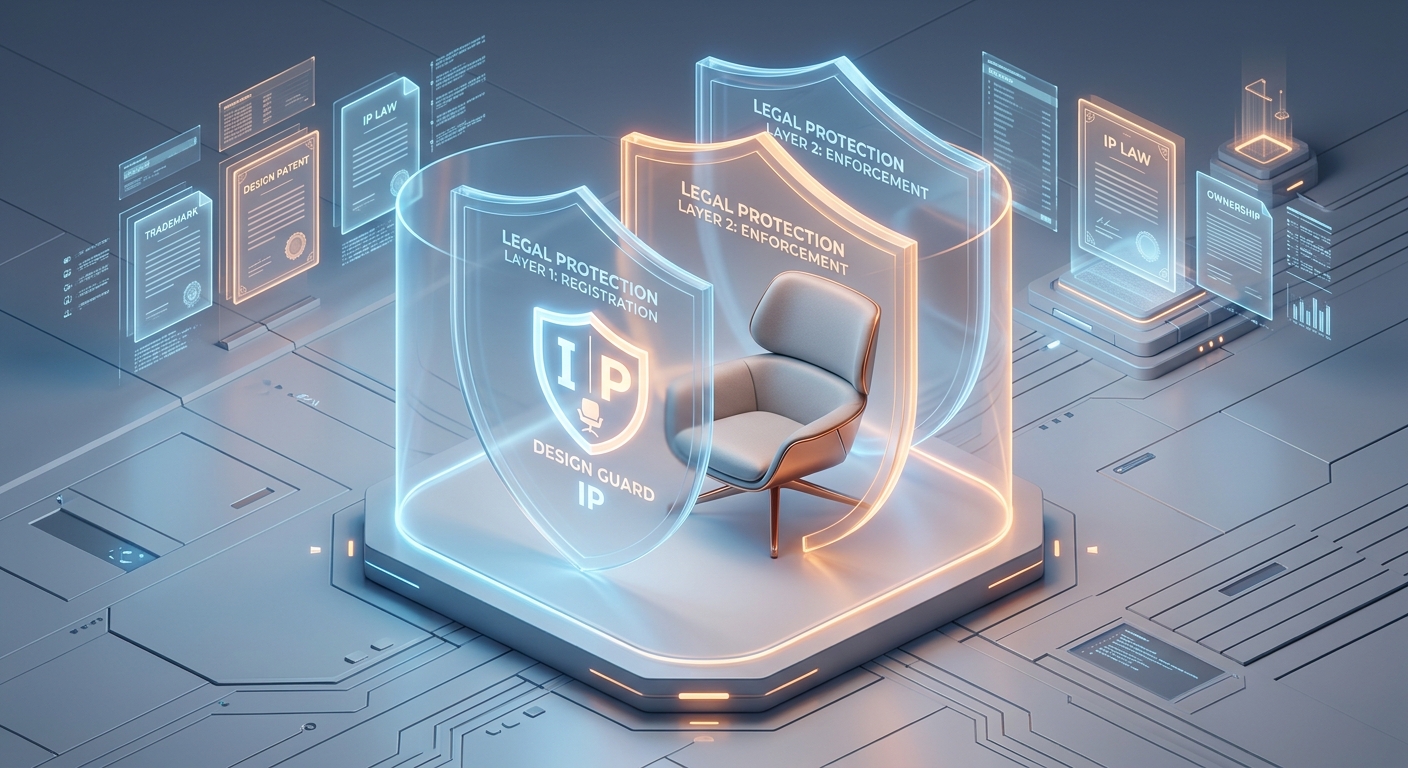
Within the framework of the global discussion on whether to choose patent protection or focus on trademarks, market leaders are increasingly choosing the path of synergy. A combined strategy allows for creating a “double barrier”: one protects the appearance of the product directly, and the other protects its identity in the consumer’s mind. This is especially critical for the design and HoReCa sectors, where competitors may try to copy not only the restaurant name but also the unique shape of designer lamps or furniture.
Registering rights to design objects along with a logo makes it possible to effectively block patent trolls and unscrupulous copyists. For example, if a malicious actor tries to change minor details in the shape of your chair to formally avoid design claims, they may still violate trademark rights if they use similar identity elements. Legal support for brand development at early stages helps identify which elements are worth patenting as designs and which should be registered as three-dimensional marks.
Such a comprehensive approach significantly simplifies intellectual property protection for designers and illustrators, as it provides more tools for pre-trial dispute resolution. Instead of proving only the novelty of a design solution, a lawyer can appeal to unfair competition and misleading the buyer through the similarity of the visual image. Below, we will analyze specific situations where name registration proves stronger than any product patent.
Case: When a TM is Better Than a Patent
Imagine a situation: your furniture or lighting brand has been on the market for five years, the product has become a bestseller, but you only thought about legal security now. Here, a trap arises—since the product has long been known to the public, it has lost the novelty criterion, and obtaining a valid patent for such a machine is already impossible. However, for a mature business in the HoReCa or product design industry, there is a workaround through registering the product form as a three-dimensional trademark. This is especially relevant when the appearance of the object has become so recognizable that the consumer identifies the manufacturer even without a logo.
Case: Recognition vs. Novelty
One of our clients produced designer chairs that, over seven years, became the calling card of many Kyiv restaurants. When cheap copies appeared on the market, the deadline for patenting the design had long passed. We changed the strategy: instead of protecting the technical solution, we proved that the chair shape itself had acquired distinctiveness. Registering the shape as a TM allowed for obtaining indefinite protection (subject to renewal every 10 years) and effectively blocking fakes on the basis of misleading buyers.
Such an approach ensures reliable brand protection from patent trolls who might try to register a similar design for themselves. If a patent protects aesthetic novelty, then a trademark protects the reputation and commercial face of your business. For designers and illustrators whose style becomes a recognizable “handwriting,” combining different tools—from copyright to TM—is the only way to maintain a monopoly on the market in the long term. When the legal foundation is laid, a logical question arises: how to make these documents work against those who try to profit from your name.
How a Patent Helps Fight Counterfeits
Design registration is just the foundation, the true value of which is revealed during active protection against fakes. Let’s look at how customs control and financial claims turn a paper certificate into an effective weapon against counterfeiting.
Working with the Customs Register of Objects
For manufacturers of product design, the border is the first and most effective line of defense. After you have received a protection document for your product, we strongly recommend entering information about it into the Customs Register of Intellectual Property Objects. This turns state inspectors into your allies: as soon as a batch of goods visually similar to your patented object hits the customs post, the system will automatically trigger a suspension of processing.
The mechanism for working with customs looks as follows:
- Traffic monitoring: customs officers check goods crossing the border for compliance with images and descriptions in the register.
- Suspension of release: if a suspicious batch is detected, it is detained for the period provided by law to clarify the circumstances.
- Notification of the rights holder: your company’s lawyers receive an official notification about the cargo detention and have the opportunity to conduct an examination.
- Destruction or blocking: if the fact of violation is confirmed, the counterfeit product does not enter the domestic market of Ukraine, and the violator incurs losses.
Such preventive intellectual property protection for designers and illustrators is critical, as stopping a truckload of copies at the border is significantly cheaper and faster than removing goods from dozens of retail stores or online platforms across the country. In addition to blocking imports, having a patent allows you to move to the next stage of influence on the violator—collecting real money for using your idea.
Financial Compensation for Rights Violation
Collecting financial compensation for the illegal use of your design is not just a way to punish the violator, but a real tool for restoring market balance. When you own the rights to a chosen solution, the law allows you to demand damages or monetary compensation from copyists for each detected case of sale. In niche segments, such as HoReCa or furniture design, where the uniqueness of the visual solution is the main driver of sales, the amount of collection is often calculated taking into account lost profits that you lost due to the appearance of cheap replicas on the market.
However, success in the courtroom depends 90% on how well pre-trial work was conducted. Fixing evidence of violation is a critical stage: I recommend necessarily conducting test purchases, collecting fiscal receipts, and carrying out professional notarized or technical certification of pages on social networks or marketplaces where the counterfeit is offered. Effective intellectual property protection for designers and illustrators is impossible without a proper documentary trail, because without confirmation of the fact of commercial use of your object, counting on serious payments will be extremely difficult. This legal base becomes a logical step toward finalizing the strategy for protecting your product.
From Idea to Protected Product
In 2026, this option finally turns from a legal document into a business capitalization tool. When a design is protected by a patent, it ceases to be just aesthetics and becomes an intangible asset that can be contributed to authorized capital, licensed, or used as a weighty argument in negotiations with investors. This is insurance for your success in a market where visual identity is the main driver of sales.
| Situation | Priority Protection | Action |
|---|---|---|
| New product (up to 12 months on market) | Industrial design patent | Fixation of unique product form |
| Product known (>12 months) | Trademark registration | Protection of recognizable silhouette and name |
| Scaling (franchise) | Comprehensive protection | Patent + TM + Copyright |
Practical example: One of our clients, a developer of designer lamps, sought help 15 months after starting sales. Since the novelty period for a patent had been missed, we applied a strategy of registering the product form as a three-dimensional trademark. This allowed not only stopping copying on marketplaces but also ensuring indefinite protection (subject to renewal every 10 years), which would have been impossible with a regular patent.
To check the uniqueness of your solution, we recommend using the official database of the Special Information System of the IP Office. Remember that 90% of success in legal disputes is ensured at the stage of pre-trial fixation of rights.
Learn more about how intellectual property protection for designers and illustrators works in our extended guide. And in the next material, we will break down why a patent for a cafe or restaurant name is needed and how to secure your signage from plagiarism.
This material is for informational purposes only. For developing an individual protection strategy and checking current IP office fees, contact the experts at brandr.legal for a consultation.
If you need help with this task, use the trademark registration service.
Frequently Asked Questions
How to protect an Instagram store name from copying if I already have a patent for the products themselves?
An industrial design patent protects only the appearance of your product, but it does not grant rights to the name of your store or profile on social networks. So that no one can create a clone page with your name, it is necessary to go through the trademark registration procedure.
TM registration allows you to:
- Obtain the exclusive right to use the name in commercial activity.
- Legally demand the removal of fake accounts through Meta (Instagram/Facebook) support.
- Prohibit competitors from using similar names in contextual advertising.
Can I get a .ua domain having only a patent for this technique?
No, having a patent for such a machine does not grant the right to register a second-level domain name in the .ua zone. According to the .ua domain regulations, only owners of registered trademarks have this opportunity.
To obtain a domain, the trademark name must fully match the desired domain name. Therefore, if you are planning a large-scale market entry and creating a professional website, TM registration is a mandatory step that complements product patent protection.
How to protect a unique interior and signage of a cafe or restaurant?
For HoReCa, there is a comprehensive approach. You can register the design of furniture, lamps, or even the unique layout of the hall as a chosen solution. However, protection of the establishment’s name and its logo (signage) is carried out precisely through trademark registration.
Such a dual strategy protects you from copying the concept “turnkey”: from the font on the menu to the specific shape of the bar counter. This is especially important for scaling a business under a franchising model.
Who are patent trolls and how can a designer protect their brand from their attacks?
Patent trolls are individuals or companies that register other people’s (or well-known) names and designs that do not yet have official protection, with the goal of subsequently extorting money from real manufacturers.
The best protection against trolls includes:
- Preventive registration: filing an application for a patent or TM even before the moment of mass market entry.
- Monitoring: regular tracking of new applications in the IP Office registers to timely file objections against the registration of similar objects by competitors.
- Fixation of authorship: saving drafts and prototypes that confirm the design was created by you.
How to extend the validity of a Ukrainian patent to international markets (Amazon, Etsy)?
A patent has territorial validity—a Ukrainian document protects only in Ukraine. If you sell products on international marketplaces, you should use the Hague System of international registration of industrial designs (via WIPO).
This allows you to file one application in English and choose a list of countries (e.g., USA, EU countries, UK) where you want to obtain protection. Having an international certificate allows you to quickly block violators through internal tools like Amazon Brand Registry or Etsy Reporting Portal.
Do I need to register a YouTube channel name as a brand if I am engaged in industrial design?
Yes, if your channel is the main source of attracting clients or monetizing content. Registering a channel name as a trademark protects you from:
- Creation of clone channels that use your reputation.
- Unfounded complaints (strikes) from competitors regarding intellectual property rights violations.
- The possibility of losing access to the name in case of trademark disputes in the future.