Why your store name is at risk
Most entrepreneurs mistakenly consider their signage their property, although without official status, any name is just a vulnerable set of letters. Let’s figure out how to protect your store name from copying and build a legally sound foundation for your brand.
The myth of owning a name without registration
Many confuse marketing recognition with legal ownership, which creates an illusion of safety. Below, we will find out why having a domain or social media accounts does not replace registration and what risks the use of an unprotected mark entails.
Why domains and social media are not enough
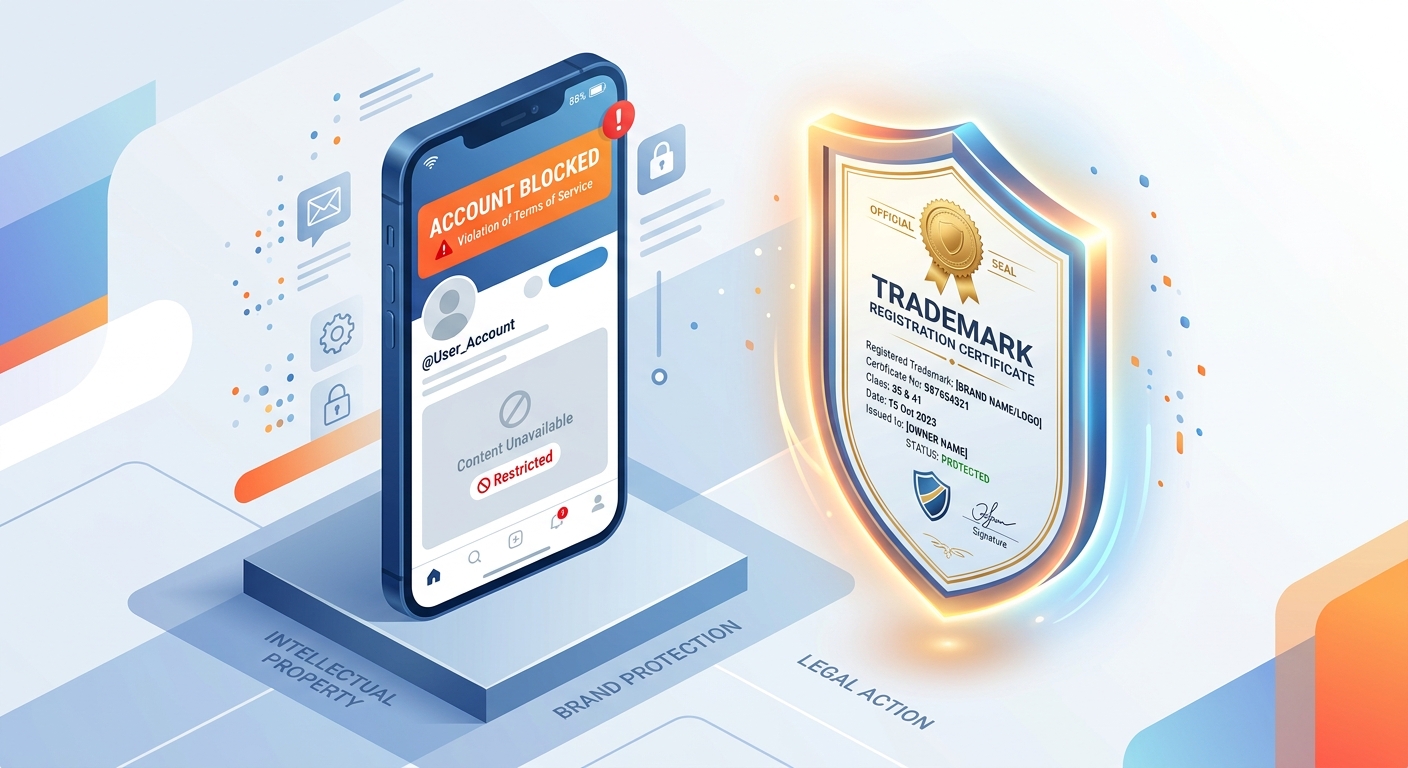
Many entrepreneurs believe that buying a domain or creating an @brand_ukraine account automatically “books” the name. This is a dangerous illusion. In reality, social networks and domain registrars provide only technical access to the interface, not legal rights to the name. Lawyer Anton Polikarpov emphasizes the importance of distinguishing between a brand as a marketing concept (recognition) and a trademark as a legal asset (monopoly). Without registration, your reputation effectively has no “armor.”
Meta’s algorithms (Instagram, Facebook) in naming disputes side with whoever provides an official certificate. If you only have a popular page, and your competitor has a trademark registration for the same name, the platform will block your account upon the first complaint via the IP Report Tool, without delving into who started working earlier.
- Your Instagram name matches that of a competitor who has a TM (risk of instant blocking).
- You use a .com.ua or .net.ua domain but do not have rights to the .ua domain (anyone can buy it by registering your name as a TM).
- Your YouTube channel or TikTok profile names are not legally secured—any “patent troll” can claim rights to them.
Real scenario: One of our clients developed a store for three years but ignored the question of whether it was necessary to register the Instagram store name. A competitor registered a similar name and filed a complaint. Meta deleted the client’s account with 50,000 followers within 24 hours. Access was restored only after initiating their own registration and lengthy negotiations, which cost the business a month of downtime and lost profit.
Technical ownership of a resource is just “renting” space on the internet. Real protection begins where a digital address is backed by state protection. This is the foundation upon which brand protection and business strategy are built in the face of fierce online competition.
Disclaimer: This material is for informational purposes only. Platform policies regarding intellectual property may change, so it is worth seeking legal support to protect a specific asset.
This aspect is covered in more detail in a separate article Brand protection and business strategy: a complete guide for entrepreneurs.
Risks of using an unregistered mark
Without an official certificate, you are building a business on rented land where the true owner of the rights can ask you to “leave” at any moment. When a competitor or patent troll registers your name to themselves, they automatically become the legal owner, and you turn into an infringer, even if you have been working in the market for years.
Using an unregistered mark carries three critical threats:
- Complete prohibition of activity: The certificate holder has the right to block the sale of goods under your name through court or administrative requests, demand the confiscation of products, and the dismantling of any signage or advertising banners.
- Payment of monetary compensation: Instead of developing your own project, you will have to pay significant sums for the illegal use of someone else’s intellectual asset, which can paralyze a small business budget.
- Forced rebranding: You lose not only the name but also customer loyalty, site SEO metrics, and recognition, effectively starting the journey from scratch under a new name.
Such vulnerability contradicts the basic brand protection strategy, where every element of identity must be legally secured by the founder. To avoid these scenarios, it is important to understand the sequence of actions for obtaining state protection. A step-by-step guide to registering a store name will help you go through this path without fatal mistakes.
Step-by-step guide to registering a store name
This algorithm will help structure the process of legalizing your brand. We will analyze the stages of uniqueness verification, the nuances of choosing Nice Classification (NCL) classes, and the specifics of interacting with the state registrar to obtain an official mark certificate.
Checking the name for uniqueness
The first step in legalizing a business is a deep audit in the registers of the IP Office and international WIPO databases. It is a mistake to believe that the absence of an identical name on Instagram guarantees safety: legally significant is the search not only for copies but also for similar designations that already have priority.
The main trap for beginners is the term “confusing similarity.” The examination may refuse registration if your mark is too similar to an existing one, even if they are not identical. For example, the names “Varto” and “Warto” for the same categories of goods will be recognized as conflicting due to the same pronunciation.
During the analysis, we necessarily check the name against three criteria:
- Phonetics: How similar is the pronunciation of the words, which can confuse the buyer by ear.
- Visuals: Does the graphic design of the letters or the combination of colors create a strong association with a well-known competitor.
- Semantics: Do the names have the same semantic load, for example, the translation of the same word into different languages.
Only by understanding how to protect a store name from copying through a preliminary search will you minimize the risk of refusal and wasting money on state fees. After confirming uniqueness, it is time to accurately define the areas of activity according to the international classification.
Choosing Nice Classification (NCL) classes for a store

The International Classification of Goods and Services (Nice Classification) is a kind of “catalog” of the entire global economy, divided into 45 classes. When you register a trademark, you do not get a monopoly on the word in general; you get it only for specific areas of activity. To effectively secure the name of your retail outlet from encroachment, it is critical to correctly define the “territory” of protection.
In the field of retail and wholesale trade, the main tool is Class 35 of the NCL. It covers the services of stores, marketplaces, and internet platforms. However, if you not only resell someone else’s goods but also create your own product under the same name, one class will not be enough. For example, for a clothing showroom with its own production line, it is necessary to register in both Class 35 (store services) and Class 25 (the products themselves).
For typical business formats, we usually recommend the following combinations:
- Classic retail and online shops: Class 35 (advertising, business management, retail services).
- Cafes, restaurants, and coffee shops: mandatory Class 43 (providing food and drink) + Class 35 for merch or franchising.
- Cosmetic brands: Class 3 (cosmetics) + Class 35 for the right to open branded stores.
- Designers and ateliers: Class 25 (clothing) + Class 40 (custom tailoring) + Class 35.
Such a strategy protects the brand’s digital capital from plagiarism on marketplaces and blocking on social networks, as platform moderators require confirmation of rights in the relevant classes. A clear list of services in the application is the foundation on which your legal security will rest during the subsequent stages at the state patent office.
Filing an application and examination stages
The path from filing documents to receiving a registration certificate from the IP Office consists of several critical stages, each of which requires attention to detail. After you have fixed the list of classes, the state verification procedure begins, where your designation is analyzed for compliance with all legal norms.
The registration process usually includes two key stages of examination:
- Formal examination: Agency specialists check the correctness of the application, the presence of all necessary data about the applicant, and confirmation of fee payment. At this stage, it is important not to make technical errors in the documents.
- Substantive examination: The longest and most complex stage, during which IP Office experts investigate the name itself. They check it for uniqueness, lack of descriptiveness, and similarity to already registered marks of other companies.
It should be taken into account that there is currently no official procedure for accelerating registration in Ukraine, so businesses should focus on standard review periods, which can last more than a year. During the examination, the applicant may receive a request from the agency or a notification of a possible refusal. This is not a verdict, but rather a signal for active action: preparing motivated objections or providing additional arguments in favor of registering your brand.
Understanding these stages allows you to respond to legal challenges in a timely manner and competently build relationships with competitors even before receiving the final document.
Comparison of protection strategies: DIY or with a lawyer
In this section, we will analyze different approaches to registration, weighing the economic feasibility of involving specialists. You will learn how to avoid hidden legal traps during self-filing and why professional support pays off.
Economic feasibility of professional support
The economics of intellectual property protection is based on the principle of prevention: the cost of a professional name check is significantly lower than the losses from forced rebranding. When an entrepreneur chooses a strategy to protect a store name from copying, they often focus on immediate savings on lawyer services, ignoring the financial risk of losing state fees in case of refusal.
| Analysis criterion | Self-filing | Support with Brandr |
|---|---|---|
| Probability of refusal | High — due to lack of experience in assessing name similarity or descriptiveness. | Minimal — thanks to in-depth preliminary search in databases and analysis of judicial practice. |
| Financial risks | Risk of irrevocable loss of paid duties and expenses for a new application. | Investment protection by submitting guaranteed “passable” brand options. |
| Strategic value | Limited — random NCL classes are often chosen without considering development plans. | Maximum — creating a legal foundation for a franchise or obtaining a .UA domain. |
Timely turnkey trademark registration allows you to identify potential conflicts before funds are invested in marketing, signage, or design. Legal support also eliminates risks created by patent trolls who hunt for unprotected names of young projects. A competent approach turns a name into an intangible asset that increases business capitalization and becomes a reliable shield against unfair competition.
How to avoid ‘pitfalls’ of filing
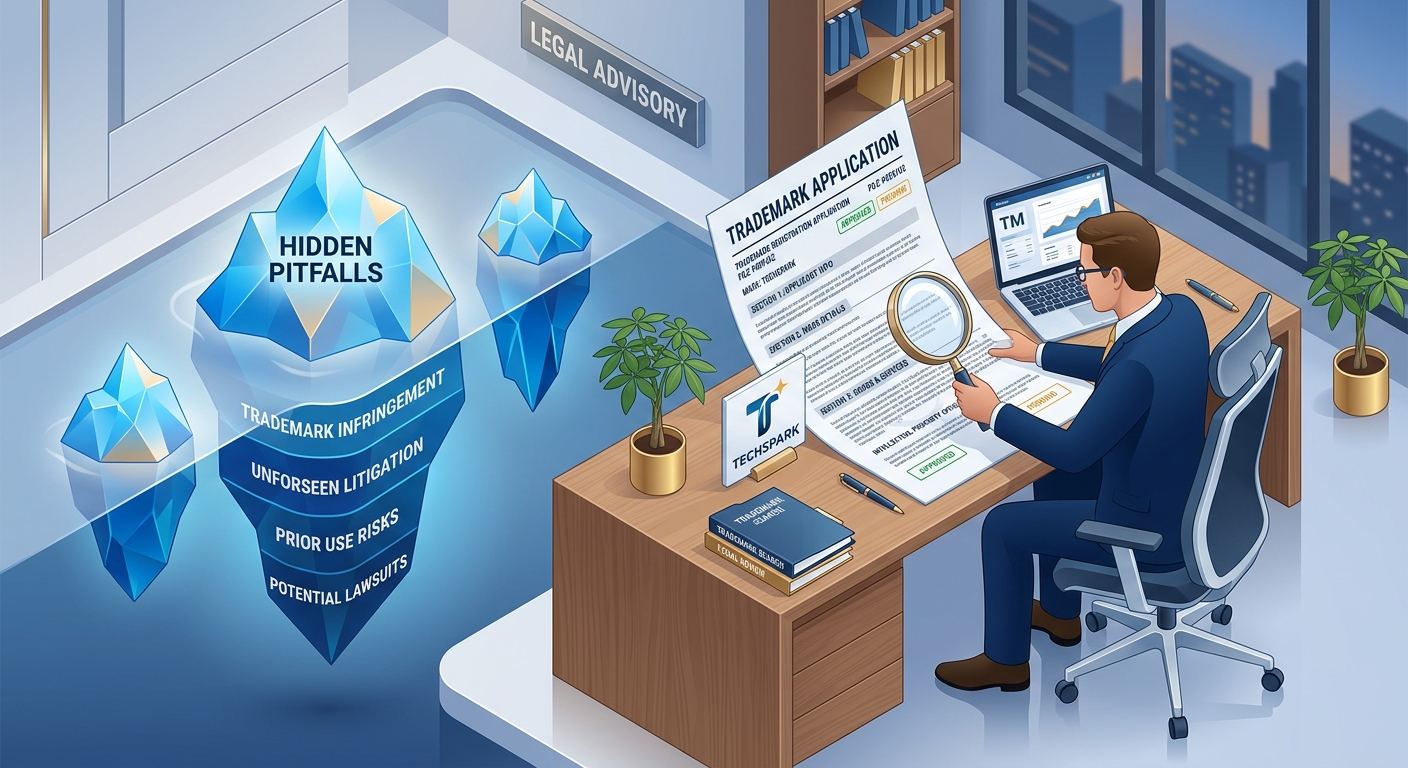
Even a carefully chosen name can become a source of losses if critical mistakes are made in procedural details at the very start. The most common mistake I have encountered in 20 years of practice is the incorrect choice of the applicant. Registering a trademark to a hired director or one of the partners without a clear distribution of rights in the future often leads to the successful brand becoming a hostage to corporate conflicts.
Another “stumbling block” is the incorrect combination of mark elements. Applicants often try to “stuff” both the name, the slogan, and a complex logo into one application, not understanding that changing even one element in the future will make such a certificate invalid. It is also important to consider the specifics of platforms: for example, whether you need to register an Instagram store name separately from the main brand depends on your scaling strategy. A mistake in the description of the color scheme or the choice of a too narrow list of goods can leave a loophole for competitors who will copy your style in a related niche.
Every inaccuracy in the wording at the filing stage is a risk of receiving a request from an IP Office expert, the response to which requires additional time and professional argumentation. Loss of priority due to a technical error can cost you the right to a unique name if a more agile competitor files a similar application a day later, but without errors.
When you have secured a reliable rear at the registration stage, it is worth preparing for active defense if your name is still attempted to be stolen.
What to do if your name has been copied
When your intellectual property is brazenly exploited, it is time to act decisively. We will look at mechanisms for pre-trial conflict resolution and the specifics of blocking violators on digital platforms to effectively protect your business from plagiarism.
Pre-trial settlement and claim work
When you discover a clone of your brand, the first reaction is anger, but legally, the one who has legal confirmation of ownership wins. In conflicts regarding store name copying, the certificate becomes a key tool that allows you to change the tone of the conversation from emotional requests to justified demands. As mentioned earlier, having a TM allows you to resolve up to 90% of disputes within a week without going to court.
“A claim without a reference to the certificate number is often perceived by the violator as a bluff. The legal weight of the document increases exponentially when you cite the Law of Ukraine ‘On the Protection of Rights to Marks for Goods and Services’. This instantly shifts the conflict from the plane of ‘who thought of it first’ to the plane of ‘who is the legal owner,'” notes Anton Polikarpov.
The first step is to prepare a Cease and Desist letter. To ensure the document is not ignored, it must be based on a comparative analysis of your intellectual property and the violator’s actions. That is why trademark registration is a mandatory foundation: without it, you cannot officially prohibit others from using the name (Art. 16 of the Law).
| Parameter | Protection without TM registration | Protection with TM certificate |
|---|---|---|
| Claim status | Subjective request | Ultimate legal warning |
| Argumentation | Reference to “fairness” | Reference to exclusive property rights |
| Evidence base | Screenshots from Instagram, receipts (hard to prove) | Certificate number in the state register |
| Platform reaction | Frequent refusals to block clones | Removal of violator content within 48 hours |
Evidence base checklist for a claim:
- Legal asset: Copy of the TM certificate or extract from the register (if the TM is still at the registration stage — form 102 about filing the application).
- Fixing the violation: Site inspection report or certified screenshots (e-evidence) showing the use of an identical name by a competitor.
- Material confirmation: Samples of the violator’s products, fiscal receipts from the “copycat store,” or screenshots of their advertising output in Google.
Practical case: Psychology of the “legal joker”
Situation: One of our clients (owner of a decor store) spent two months trying to persuade a copycat to change the name via personal messages. Result — ignoring and blocking.
Solution: An official claim was prepared with a copy of the certificate. The letter clearly pointed to the violation of Art. 20 of the Law (liability for illegal use of a mark).
Result: The violator deleted the page and carried out a full rebranding within 3 working days, realizing the prospect of a lawsuit and payment of compensation.
It is important to remember: if the pre-trial claim did not work (which happens in only 10% of cases), you already have a ready-made base for the next step — filing a complaint with social network administrators or going to court. A properly drafted claim is evidence of your attempt at peaceful dispute resolution, which is positively assessed by judges.
Disclaimer: this material is for informational purposes only and is not an individual legal consultation. The effectiveness of protection depends on the priority date of your TM and the correctness of the NCL class selection during registration.
Protecting rights in the digital space
Digital platforms operate according to their own regulations, where a mark certificate becomes the main argument in resolving disputes. For example, marketplaces like Rozetka and Amazon have special protection programs (including Amazon Brand Registry) that require mandatory provision of a certificate number. Without official confirmation of rights, the administration will not even begin to consider a complaint against violators who copy your product cards or dump prices under your name.
A separate strategic aspect is presence on social networks. Owners often ask if it is necessary to register an Instagram store name if it only works through Direct. The answer is unequivocal: without a protected brand, you are defenseless against clone accounts. Having a TM allows you to initiate the procedure for blocking fake profiles on Instagram and Facebook within a few days, citing intellectual property infringement. A similar mechanism works for creators: registering a YouTube channel name as a brand allows you to challenge content theft and the use of identical naming by other bloggers.
A critically important element of online presence is the .UA domain zone. Unlike .com.ua or .net, you can get an address in the elite .UA zone only if you already have a successful trademark registration that completely matches the desired domain name. This is effectively the only reliable way to protect yourself from cybersquatters — scammers who buy up names of well-known brands to then demand a ransom for them.
In Google Ads, having rights to a TM makes it possible to prohibit competitors from using your name in the texts of their advertisements. Thus, protection in the digital space turns from a formality into a real lever of influence, allowing you to clear search results and social networks of projects parasitizing on your reputation.
Your name is capital, not just a sign
Your name is not just letters on a sign, but intellectual capital, the value of which grows along with customer trust. As Anton Polikarpov summarizes, timely trademark registration turns protection against copying from a headache into a reliable insurance policy for the business. This is the foundation that allows you not only to scale safely but also to capitalize on your success through franchising.
| Scenario | Without legal protection | With TM certificate |
|---|---|---|
| Appearance of a copycat store | Lengthy negotiations without levers of influence | 90% of disputes are resolved pre-trial within a week |
| Fight for online presence | Complaints on social networks are often ignored | Ultimate blocking via Brand Registry |
| Competition in Google Ads | Rivals use your name in advertising | Official prohibition of brand use in ads |
In our practice, there have been cases where clients lost access to promoted accounts due to “patent trolls” who registered the name before the real owner. To avoid such risks, we recommend regularly checking the status of filed applications through the digital registers of the IP Office.
Remember: legal preparation at the start means no losses in the future. To delve deeper into protection tools on digital platforms, we recommend reading our next material on protecting Instagram stores, where we will analyze the specifics of working with social media support algorithms.
Disclaimer: The material is for informational purposes only and is not an individual legal consultation. The legal position and procedures may change depending on the current practice of regulators.
If you need help with this task, use the trademark registration service.
Frequently Asked Questions
Does Ukrainian trademark registration protect my brand abroad?
No, the legal protection of a trademark (TM) is territorial in nature. This means that a certificate issued in Ukraine is valid only on the territory of our country. If you plan to scale your store to international markets or sell goods through foreign marketplaces, you need to take care of international registration.
There are two main paths:
- Madrid System: allows you to file one international application through Ukrpatent, specifying the list of countries where you want to obtain protection. This is significantly cheaper and easier than filing separate applications in each country.
- National procedure: filing a separate application directly to the patent office of a specific country (e.g., USPTO in the USA).
How long is a trademark certificate valid and does it need to be renewed?
A trademark certificate in Ukraine is valid for 10 years from the date of filing the application. After this period expires, you have the right to extend the validity of the certificate each time for another 10 years an unlimited number of times.
It is important to remember:
- The application for renewal and payment of the corresponding fee must be submitted during the last year of the certificate’s validity.
- If you miss this deadline, the law provides an additional 6 months for “reanimating” the TM, provided that a fee increased by 50% is paid.
- If the TM is not used in Ukraine for the last 5 years, any interested person can file a lawsuit for the early termination of the certificate’s validity.
What is better to register: the name separately or the name together with the logo (design)?
The most strategically correct approach is to register a word trademark (just the name, without binding to a font or color). This provides the broadest protection: you will be able to change the logo design, color scheme, or font, and the right to the name itself will remain with you.
Registration of a combined TM (name + graphic element) protects the brand exactly in the form in which it is submitted. If you significantly change the logo, the old certificate may not provide proper protection for the new design. However, if the store name consists of commonly used words that are difficult to register on their own, a unique graphic design can help obtain a positive decision from the examination.
Can I register a name that simply describes the product (e.g., “Sofa Store”) as a TM?
According to Ukrainian legislation, designations that are purely descriptive (indicating the type, quality, quantity, composition, or purpose of the goods) cannot receive legal protection as trademarks. The Ukrpatent examination will most likely refuse such an application, as such terms should be free for use by all market participants.
How to bypass this limitation?
- Add a fanciful word or a unique surname to the descriptive name.
- Develop an original graphic image (logo).
- Prove that the name has acquired distinctiveness as a result of long-term use (this is a complex process that requires a significant amount of evidence: receipts, advertising budgets, consumer surveys).
How to act if someone has already filed a similar name for registration but has not yet received a certificate?
If you discover that a competitor has filed an application for an identical or confusingly similar name, you can file an opposition against the application. This is an official document that is submitted to the IP Office and contains arguments as to why this TM cannot be registered.
Grounds for opposition can be:
- Your earlier use of this brand (if you have evidence).
- Similarity to your already registered TM or previously filed application.
- Misleading consumers.
Such a tool allows you to stop the violator at the examination stage without taking the matter to lengthy litigation.
Do I need to register separate TMs for different groups of goods in one store?
Everything depends on your business model. When filing an application, you choose NCL (International Classification of Goods and Services) classes. For stores, the key is Class 35, which covers retail or wholesale trade services and advertising.
However, if you do not just resell other people’s goods but release products under your own name (Private Label), you definitely need to register the name for product classes as well. For example:
- For a clothing store — Class 35 (trade) + Class 25 (clothing).
- For a coffee shop — Class 43 (catering services) + Class 30 (coffee, tea).
Registration only in Class 35 will not protect your name if someone else starts producing goods under this brand.