Brand as the Main Asset of a Modern Entrepreneur
A business without its own trademark is like a house on rented land, where you can be evicted at any moment. In this guide, I will explain how trademark registration helps build a secure foundation for your digital capital.
Registering an Instagram Shop Name as a TM
Social networks create an illusion of ownership, but your account is just digital rent. Next, we will analyze whether you need to register an Instagram shop name and what the application procedure looks like for online projects.
Why a profile name needs legal protection

For most e-commerce projects, an Instagram profile name is a key sales channel, but from a legal perspective, this asset remains “ownerless” until it is recorded in the state register. Meta’s intellectual property policy is uncompromising: the owner of a registered mark can block any page with a similar name through a simplified complaint form. Understanding how to protect a shop name from copying becomes a matter of business survival, as a deleted account is often impossible to restore even through an appeal.
The main advantage that trademark registration gives to small business is the transition from defense to control. Without official status, you are vulnerable to “patent trolls” who register successful names to themselves to demand a ransom later. Conversely, timely trademark registration allows you not only to scale safely but also to receive priority support from platforms in case of clones or fake pages parasitizing your reputation.
To assess the security of your brand, it is worth analyzing several critical points: whether a professional search for the name was conducted in official registers before launch, whether you have a written transfer of rights to the logo from the designer, and whether there are duplicate accounts in the network that are already using your identity. If the profile name is not checked for uniqueness, you risk receiving a lawsuit from a rights holder who registered a similar brand earlier. That is why the question of whether you need to register an Instagram shop name is decided in favor of protection even at the stage of launching ads, so that investments in traffic are not canceled by a single blocking.
This aspect is covered in more detail in a separate article Do you need to register an Instagram shop name as a trademark?.
This aspect is covered in more detail in a separate article How to protect a shop name from copying: a step-by-step guide.
Application procedure for online projects
For successful registration of an online business, the key point is the correct selection of classes of the International Classification of Goods and Services (ICGS). If you operate through Instagram or your own website, class 35, which covers retail services, advertising, and management, is usually the base. However, for many digital projects, this is not enough for full security.
For example, educational platforms, bloggers, or media projects must include class 41 in the application. Registering a YouTube channel name as a brand in this category protects the intellectual efforts of authors from copying and unauthorized use of content under a similar name. Competent brand protection and business strategy at the document submission stage allow you to avoid a situation where your TM is formally registered but does not actually cover real activity on the network. The submission procedure at the IP Office is now fully digitized, which allows you to fix the priority date immediately after sending the electronic form.
When choosing classes, it is worth looking “ahead,” adding those directions where the project plans to scale over the coming years. This is much cheaper than filing new applications for expanding the list of services later. When the market coverage strategy is defined, a technical check of the name for “availability” in the registers comes to the fore.
Trademark search and verification before registration
Before submitting documents to the IP Office, it is necessary to check the name for uniqueness. We will analyze the difference between similarity and identity of brands, and also evaluate the critical legal risks of using unregistered marks in commerce.
Difference between similarity and identity of names
The biggest mistake of an entrepreneur is to believe that changing one letter in a name or translating a word into another language makes a brand unique. In intellectual property, there is a concept of “similarity to the point of confusion.” This is a state in which a consumer may perceive two different marks as belonging to the same manufacturer or related companies. The examination evaluates the designation according to several independent parameters.
| Similarity criterion | Essence of assessment | Risk example |
|---|---|---|
| Phonetic | Coincidence of sounds, stresses, and general rhythm of pronunciation. | The names “Kredo” and “Credo” sound identical, which will lead to a refusal. |
| Visual | Similarity of graphic execution, fonts, colors, and composition. | Use of similar logo geometry or characteristic decorative elements. |
| Semantic | Semantic meaning of names, including synonyms and translations. | “Green Wood” and “Zelenyi Lis” can be recognized as similar for identical goods. |
Identity is a complete coincidence that is easy to filter out at the start. Similarity, however, is much more insidious, as it is based on the subjective perception of an expert. If you receive an inquiry or a preliminary refusal due to similarity with an existing mark, this requires the preparation of a thorough response with an analysis of distinctiveness. Legal support for identity development allows you to minimize such incidents at the creative stage, cutting off weak names before funds are invested in them. Neglecting a preliminary check creates a direct threat to the stability of your presence on the market.
It is the ignoring of search results that most often leads to situations where a business is forced to stop working due to claims from third parties.
Risks of using an unregistered mark
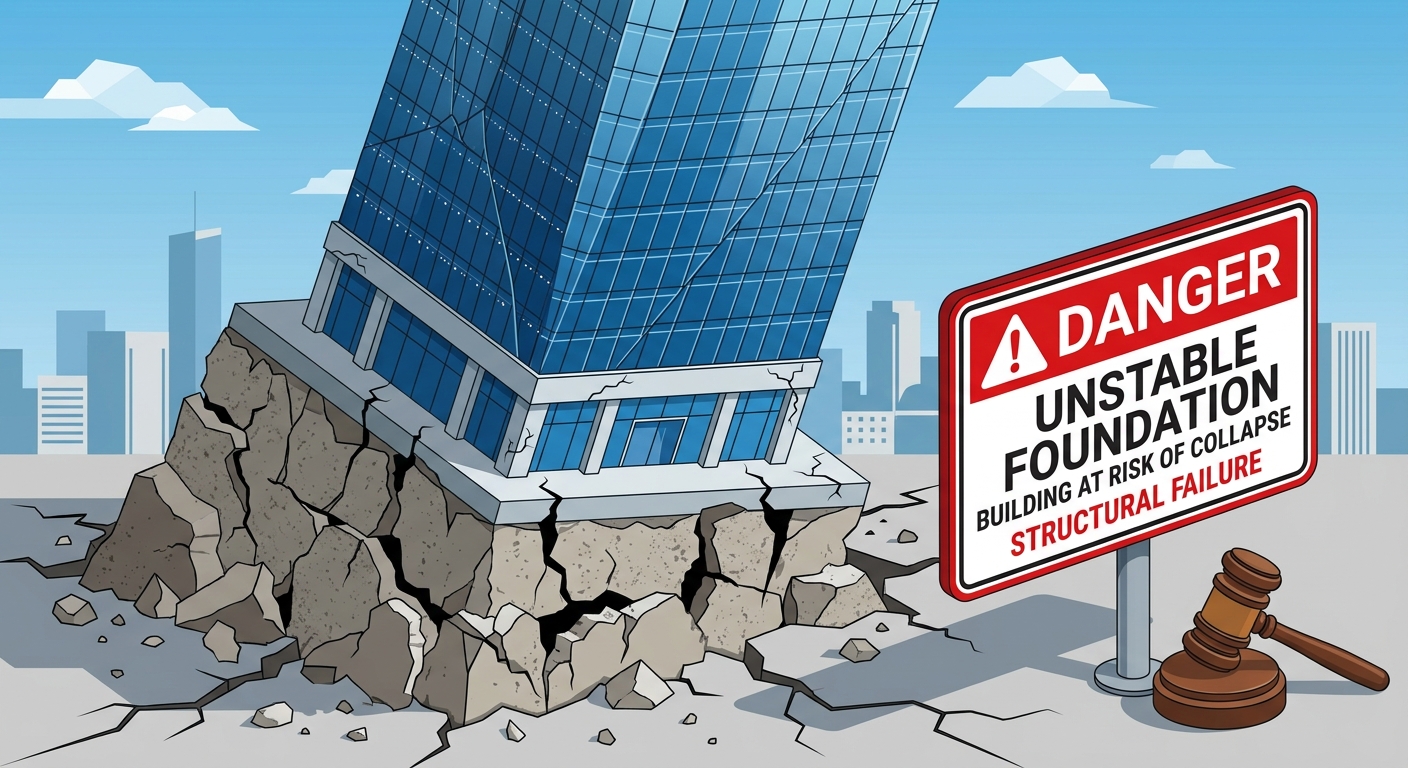
Working with an unregistered designation is like building a skyscraper on rented land without a contract: at any moment, the owner of the plot can ask you to leave. If the chosen name turns out to be similar to an existing TM, you risk not only receiving a refusal from the IP Office but also becoming a defendant in a lawsuit for infringement of intellectual property rights.
The main financial and reputational threats include:
- Forced rebranding: this is not just replacing a logo, but a complete loss of investments in advertising, packaging, signage, and SEO promotion. For many companies, this means starting from scratch.
- Court compensation: under Ukrainian law, the rights holder can demand compensation from the infringer, the amount of which varies from 10 to 50,000 minimum wages. An alternative option is the recovery of lost profits or double the cost of license fees.
- Blocking of assets: the court can seize goods with a conflicting name or prohibit the use of a domain, which effectively stops sales.
A particular danger is brand protection against patent trolls — individuals who register free but popular names to themselves for the purpose of further blackmailing the real business owner. By understanding what trademark registration gives to a small business, you are effectively buying insurance against such situations. The absence of a certificate makes your project vulnerable to any competitor who decides to misappropriate your reputation. When the legal foundation is laid, there is a need for active defense of the created asset.
Brand protection against plagiarism and competitors
We will look at a clear plan for countering plagiarism and learn how to effectively fight patent trolling to turn your rights into a real tool for active protection of assets from unscrupulous competitors.
Algorithm of actions in case of intellectual property theft
Detecting a copy of your product or profile causes logical indignation, but emotions are a poor assistant in jurisprudence. When the question arises of how to protect a shop name from copying, the first step should be a professional recording of the fact of the violation before the opponent deletes the evidence.
- Evidence collection: take screenshots of the infringer’s pages where the use of your TM, assortment, and contacts is visible. It is optimal to use services for automatic recording of web page content or have them certified by a notary (if you are planning an international court case).
- Cease & Desist: prepare an official demand to stop using the intellectual property object. Often, a well-drafted document from a law firm solves the problem without a court.
- Complaint to the platform: use internal protection tools (IP Rights Protection) on Facebook, Instagram, Amazon, or Google. Having a TM certificate, you can achieve the blocking of the infringer’s page in a matter of days.
- State authorities: in case of large-scale plagiarism, it is worth contacting the Antimonopoly Committee (regarding unfair competition) or the cyber police.
Advice from Anton Polikarpov: Never write to the infringer in private messages with threats before you have recorded the evidence. Having received such a “signal,” the pirate can delete all traces in a minute, and you will lose the opportunity to prove the fact of theft in court.
Systematic work with infringers not only cleans the market but also increases the capitalization of your intellectual property. A separate challenge in this fight is specific abuse schemes where opponents try to attack you with legal tools.
Fighting patent trolling in Ukraine
Patent trolling in Ukraine is not just a legal anomaly, but a sophisticated blackmail scheme where your reputation becomes the object of attack. Malicious actors register commonly used words, popular Instagram shop names, or even YouTube channel names that do not yet have official TM status to subsequently block business operations at customs or through complaints to marketplaces. In such cases, professional trademark registration becomes the only legitimate way to regain control over the brand.
Drawing on the 20-year experience of Anton Polikarpov, we identify three critical risk zones where trolls act most aggressively:
| Troll attack method | Business protection tool |
|---|---|
| Blocking goods at customs by entering the TM into the Customs Register of IP objects. | Challenging the registration by proving the lack of real use of the mark by the troll. |
| Mass complaints to Meta (Instagram/Facebook) demanding account deletion. | Filing a counter-notice based on the priority of name use before the troll’s application date. |
| Offer to “buy back” your own name at an inflated price. | Filing an opposition (objection) to the IP Office according to Art. 10 of the Law on Protection of Rights to Marks. |
Case study: One of our clients, the owner of a media project, faced an attempt to seize the channel name by a person who registered a similar designation for class 35 goods. Since the client had evidence of public use of the name for a year before the opponent’s application, we managed to stop the issuance of the certificate to the troll. A key factor was the existence of contracts with advertisers and screenshots of the analytics panel with the brand creation date.
The most effective mechanism for fighting is the opposition procedure. If you discover that someone is trying to register your name, you have a window of opportunity of 5 months after the publication of the application to file a reasoned objection. This is much cheaper and faster than subsequently canceling an already issued certificate in court. According to the Law of Ukraine “On the Protection of Rights to Marks for Goods and Services”, the basis for refusal can be the bad faith of the applicant or misleading consumers regarding the manufacturer of the goods.
Remember: the protection strategy is built on being proactive. Monitoring new competitor applications and timely trademark registration is your insurance policy against “legal racketeering,” which allows you to scale your business without the fear of sudden sales blocking.
International registration for business scaling
Entering foreign markets requires expanding the legal perimeter. We will analyze how international registration works through the Madrid System and what critical mistakes entrepreneurs make when launching sales on Amazon.
Advantages of the Madrid System for entrepreneurs
International registration under the Madrid System is a strategic tool for companies planning expansion. Instead of hiring separate lawyers in each jurisdiction, an entrepreneur submits one application through a national office (in Ukraine — IP Office). This opens access to brand protection in over 130 countries, including the USA, EU, China, and Japan, through a single “window” of the World Intellectual Property Organization (WIPO).
| Parameter | Direct registration (national) | Madrid System |
|---|---|---|
| Number of applications | Separate for each country | One international application |
| Representation | Mandatory local attorneys in each state | One expert in Ukraine is sufficient |
| Rights management | Changes are made to each register separately | Single entry in the international register |
| Payment currency | Local currencies of each country | Swiss Franc (CHF) |
“For startups, we recommend the formula: jurisdiction of presence (Ukraine) + key markets (e.g., USA/EU) + country of production. The latter point is often ignored, but registration in the country where the product is manufactured (e.g., China) is a critical safeguard. Without it, a patent troll can block your product right at the factory exit, accusing you of infringing on their rights in the local market.”
When to choose the Madrid System: a checklist for business
- Plans for 3+ countries: If your strategy covers several markets, a centralized procedure significantly simplifies administration.
- Need for flexibility: The system allows for “subsequent designation” — adding new countries to an existing international registration later when the business scales.
- Resource optimization: High-quality trademark registration under the international procedure eliminates the need to pay fees to dozens of foreign patent attorneys at the submission stage.
Practical case: One of our clients in the e-commerce sector scaled to the markets of Poland, Germany, and the Czech Republic. Instead of three parallel processes with different languages and currencies, one application was filed. This allowed the budget to be focused on marketing rather than on administering legal folders. The main advantage here is not only savings at the start but also the simplicity of extending the TM validity after 10 years: one action instead of three separate procedures.
It is important to remember about “central dependence”: for 5 years, international protection is tied to the fate of the Ukrainian TM. If the base application is rejected or canceled, the international registration will also lose its validity. Therefore, before entering foreign markets, it is critically important to conduct a risk audit in Ukraine.
Note: The calculation of official fees is carried out individually through the WIPO Fee Calculator depending on the chosen jurisdictions and ICGS classes.
Legal traps when entering Amazon

Entering global marketplaces requires not only logistical readiness but also specific digital protection, where registration under the Madrid System becomes the foundation for activating control tools. On Amazon, the key mechanism is Brand Registry — a closed system that gives the trademark owner priority in managing product cards and the ability to promptly remove counterfeit goods. Without an official certificate, you remain defenseless against “listing hijackers” who can change your product description or block your own sales through fictitious complaints.
Expert insight from Anton Polikarpov: Many entrepreneurs make the mistake of relying solely on an international application when entering the USA. Although Amazon accepts TMs registered through the Madrid System, for the American market, I often recommend direct filing with the USPTO. This allows for faster protection and avoids specific procedural refusals related to overly broad product descriptions, which is a typical problem for applications from the EU or Ukraine. In the European Union (through EUIPO), the procedure is more unified but requires careful monitoring of new competitor trademarks to timely file an opposition against similar names.
Legal risks lurk as early as the identity development stage: if the logo or name has signs of descriptiveness or is too similar to existing brands in the USA or EU, the marketplace may reject the application for Brand Registry. This leads to the need for emergency rebranding after the goods have already been delivered to FBA warehouses. Professional verification at the visual style creation stage allows you to create a legally sound asset that will not only pass Amazon’s filters but also become a base for further business capitalization.
A reliable legal support on international platforms creates the prerequisites for the next logical step — turning a protected brand into a financial instrument through legal audit and asset capitalization.
Legal audit and asset capitalization
Well-structured intellectual property turns a recognizable name into a real financial asset. Next, we will look at how a legal audit helps increase the company’s market value and use the trademark for legal tax optimization.
How a TM increases the company’s market value
Within the framework of legal audit and asset capitalization, a trademark ceases to be just a “pretty picture” and becomes an intangible object with a clear monetary valuation. Including a TM in the company’s authorized capital allows you to legally increase the company’s net assets without attracting additional funds. This is critically important when attracting investments or obtaining bank loans, where the size of equity directly affects financing terms and partner trust.
Hypothetical example: TM as a lever of capitalization
Consider two coffee shop chains with identical profit indicators. Chain A operates without a registered trademark — in fact, it sells only equipment and lease agreements. Its value upon sale is limited to the price of the “hardware.” Chain B has a registered TM portfolio and a developed protection strategy. When launching a franchise, Chain B sells not just recipes, but the right to use a monopoly brand. Thanks to legally secured rights, the market value of Chain B will be 2–3 times higher due to goodwill and projected royalties that the buyer is willing to pay for working under a protected name.
The capitalization process requires professional assessment of risks of third-party rights infringement and analysis of license agreements. If the brand is legally “clean” and properly documented, it turns into a tool that generates passive income through license fees, creating new horizons for tax optimization through royalties and licenses.
Tax optimization through royalties and licenses
In addition to the direct impact on capitalization and market valuation of the company, intellectual property opens the door to legal management of cash flows within the business structure. Using license agreements for royalty payments — payments for the right to use a TM or other objects — is a classic tool for optimizing the tax burden. According to the Tax Code of Ukraine, such payments are usually included in expenses, which directly reduces the tax base for the operating company’s profit tax.
However, strategic asset management and business legal security require flawless documentation, as the Tax Code contains a number of restrictions. In particular, there are limits on including royalties in expenses if the recipient is a non-resident from a “low-tax” jurisdiction or a person who is not the beneficial owner of the rights. For creative industries, where registering a YouTube channel name as a brand is relevant, such a mechanism allows authors to receive legal passive income from media networks, which is often taxed at more favorable rates than ordinary entrepreneurial profit.
From my 20 years of experience, tax risks arise not because of the fact of royalty payment itself, but because of the lack of evidence of real use of the object or undervalued/overvalued license cost. Market valuation of rights by a professional valuation entity is your “bulletproof vest” during tax audits.
It is important that the license agreement clearly defines the scope of rights and the territory of use. If you are planning to scale, a properly built licensing system will allow you not only to optimize taxes but also to create a transparent structure for attracting investors. Only with properly registered rights will the legal strength of your brand become a reliable foundation for financial stability.
This aspect is covered in more detail in a separate article Registering a YouTube channel name as a brand: why do authors need it?.
Your brand is your fortress
Your brand is not just a visual image or a name on social networks, but a strategic intangible asset that requires a legal foundation. According to the Law of Ukraine “On the Protection of Rights to Marks for Goods and Services”, we have a “first-to-file” principle: the right to the name is obtained by the one who first applied to the IP Office, not the one who started selling the product earlier. Without an official certificate, the business remains a “tenant” of its own name, vulnerable to the actions of patent trolls.
Express checklist of your brand’s legal resilience:
| Protection component | What it gives to a small business | Consequences of ignoring |
|---|---|---|
| TM Certificate | Monopoly on the use of the name and logo. | Risk of rebranding due to third-party claims. |
| .ua domain | High level of trust and SEO advantages. | Impossibility of registration without a TM. |
| IP protection on social networks | Tool for unblocking Instagram/YouTube channels. | Loss of an account with thousands of followers due to a complaint. |
Typical case from practice: One of our clients in the e-commerce sector invested significant funds in promoting an Instagram shop but postponed the formalities. A competitor registered a similar name and, through Meta’s intellectual property rights protection mechanisms, achieved the deletion of the shop’s page. As a result — loss of customer base and the need for a complete renaming. That is why timely trademark registration is not an expense, but a protective investment that guarantees how to protect a shop name from copying at any stage of scaling.
We at BrandR have over 20 years of experience in intellectual property law and know what trademark registration gives to a small business: from obtaining a .ua domain to legal tax optimization through royalty payments. Do not leave your success to chance. Take an audit on the brandr.legal website to ensure that your “business fortress” is securely protected.
Disclaimer: This material is for informational purposes only and is not an individual legal consultation. Procedures and fees may change in accordance with current IP Office regulations.
If you need help with this task, use the trademark registration service.
Frequently Asked Questions
How does trademark registration help in obtaining a domain name in the .UA zone?
According to the rules of the .UA domain, registration of private second-level domain names (e.g., brand.ua) is possible only for owners of corresponding trademarks. This is a mandatory condition of the zone administrator.
- The domain name must fully coincide with the name of the registered TM.
- To register, you must provide the certificate number of the registration of the mark for goods and services in Ukraine.
- Having a .UA domain increases the level of customer trust and protects the business from cybersquatting (seizing your name on the network by other persons).
This is a strategic asset that makes your online presence more solid and legally protected.
What is the difference between the ® and ™ symbols and when can they be used?
The use of these symbols is regulated by intellectual property legislation and has a specific meaning:
- ™ (Trademark) — informs consumers that the company considers this designation its trademark. Usually, this symbol is used at the stage when the registration application has already been filed but the certificate has not yet been received. It has practically no legal force in Ukraine, but performs a warning function.
- ® (Registered) — a sign of trademark protection. Only the owner of an already registered trademark has the right to use it.
Important: using the ® sign for an unregistered TM can be interpreted as misleading consumers, which entails legal risks.
Can a specific color, sound, or packaging shape be registered as a trademark?
Yes, modern legislation allows for the registration of non-traditional trademarks if they are capable of distinguishing the goods of one manufacturer from another:
- Colors: you can register a specific shade (e.g., the special purple color of Milka or the orange of Hermès), but this is a complex procedure that requires evidence of long-term use.
- Three-dimensional designations: the unique shape of a bottle, box, or the product itself (e.g., the shape of Toblerone chocolate).
- Sound marks: short melodies or sound intros associated with the brand (e.g., the Intel or Netflix jingle).
Registration of such objects creates an additional layer of protection against copying the “look and feel” of your product.
What is the validity period of a trademark certificate and how to extend it?
A trademark certificate in Ukraine is valid for 10 years from the date of application (not from the date of document issuance). This period can be extended an unlimited number of times.
The extension procedure includes:
- Filing a corresponding petition to the IP Office during the last year of the certificate’s validity.
- Payment of the state fee for extending the validity period.
If the deadline is missed, the owner has a “grace” period of 6 months to restore rights, provided that an increased fee is paid. If this deadline is also ignored, legal protection ceases, and the name can be registered by anyone else.
What is “termination of TM validity due to non-use” and why is it dangerous?
The law provides that a trademark must work on the market. If the owner does not use the registered TM without valid reasons continuously for 5 years, any interested person can apply to the court with a demand to prematurely terminate its validity.
Why this is important for business:
- Competitors can cancel your registration to free up the name for themselves.
- This is often used as a countermeasure in response to your claims regarding rights infringement.
For protection, it is recommended to keep evidence of real brand use: contracts with clients, receipts, advertising layouts, screenshots of the site with a product offer.
Can a trademark be sold or pledged to obtain a loan?
Since a trademark is an intangible asset, any civil-law transactions can be carried out with it, just like with real estate or equipment:
- Alienation (sale): you can fully transfer ownership rights to another person based on a contract.
- Pledge: a TM can act as collateral for credit obligations if it has undergone an official valuation.
- Franchising: granting the right to use the brand to other entrepreneurs in exchange for royalties.
All agreements regarding the transfer of rights to a TM must be recorded in the official register to take effect before third parties.